Blog

Podcast Episode: Article 11 โ€“ Security

Pip: Wissam Charafeddine has been thinking about what it means to be free โ€” specifically, the part where the government has to ask permission before going through your stuff.

Mara: Today we're looking at Article 11, which covers security, privacy, and the question of how far state power can reach before it crosses a line. Let's start with what that line actually looks like.

Article 11 โ€” Privacy, Liberty, and State Power

Mara: The core tension here is whether privacy is a legal technicality or a condition of freedom itself โ€” and the post opens by staking out a clear position on that question.

Pip: The framing sets it up directly: "A free society cannot exist where people live in fear that their homes, possessions, communications, or private lives may be invaded without just cause."

Mara: So the upshot is that privacy isn't a preference you trade away for convenience โ€” it's the structural condition that makes other freedoms possible. Without it, the rest collapses.

Pip: The post traces this back historically. General warrants โ€” vague, sweeping, requiring no specific justification โ€” were a tool imperial governments used to intimidate populations and silence dissent. Article 11 is a direct answer to that history.

Mara: And the post extends that answer into the present. Phones, laptops, cloud accounts, browsing histories, biometric data โ€” the argument is that a device search today is qualitatively different from searching a desk drawer. As the post puts it, "it is a search of a person's mind, relationships, beliefs, finances, movements, and memories."

Pip: Which makes the border-search question genuinely uncomfortable. Agencies like U.S. Customs and Border Protection have claimed authority to inspect devices at ports of entry โ€” sometimes without a warrant, sometimes without individualized suspicion โ€” under the doctrine that borders are a legal exception zone.

Mara: The post doesn't dismiss the security argument. It acknowledges that governments need tools to address trafficking, terrorism, and organized crime. But it holds the line: security cannot become an unlimited justification. Any border-search authority should be narrow, judicially overseen, and tied to genuine articulable suspicion.

Pip: There's a sentence near the end that does a lot of work: "The power to search must never become the power to dominate." That's the whole article in eleven words.

Mara: The post closes by arguing that true security and individual freedom aren't competing values โ€” they reinforce each other, but only when the state remains bound by law, accountability, and respect for human dignity.


Pip: So the argument is that every erosion of privacy, even a small one at a border checkpoint, is a test of whether the exception eventually becomes the rule.

Mara: That question โ€” where restraint ends and normalization begins โ€” seems like exactly the kind of thing worth revisiting next time.

Article 11 โ€“ Security

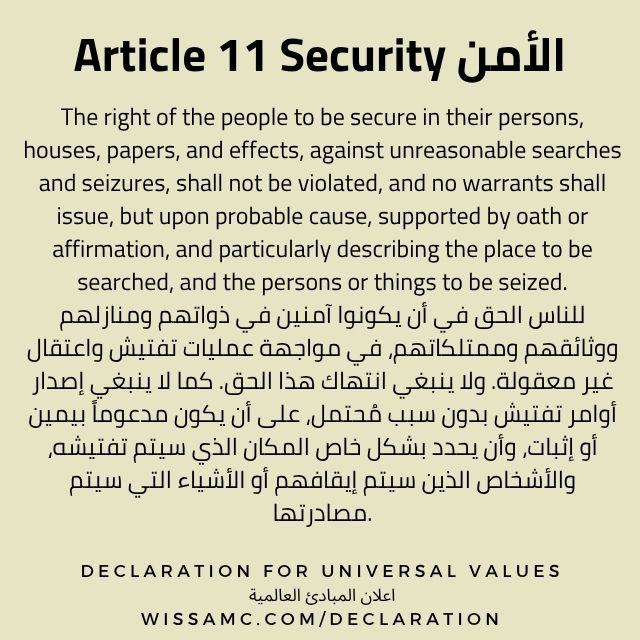
The right of the people to be secure in their persons, houses, papers, and effects, against unreasonable searches and seizures, shall not be violated, and no warrants shall issue, but upon probable cause, supported by oath or affirmation, and particularly describing the place to be searched, and the persons or things to be seized.

ู„ู„ู†ุงุณ ุงู„ุญู‚ ููŠ ุฃู† ูŠูƒูˆู†ูˆุง ุขู…ู†ูŠู† ููŠ ุฐูˆุงุชู‡ู… ูˆู…ู†ุงุฒู„ู‡ู… ูˆูˆุซุงุฆู‚ู‡ู… ูˆู…ู…ุชู„ูƒุงุชู‡ู…ุŒ ููŠ ู…ูˆุงุฌู‡ุฉ ุนู…ู„ูŠุงุช ุชูุชูŠุด ูˆุงุนุชู‚ุงู„ ุบูŠุฑ ู…ุนู‚ูˆู„ุฉ. ูˆู„ุง ูŠู†ุจุบูŠ ุงู†ุชู‡ุงูƒ ู‡ุฐุง ุงู„ุญู‚. ูƒู…ุง ู„ุง ูŠู†ุจุบูŠ ุฅุตุฏุงุฑ ุฃูˆุงู…ุฑ ุชูุชูŠุด ุจุฏูˆู† ุณุจุจ ู…ูุญุชู…ู„ุŒ ุนู„ู‰ ุฃู† ูŠูƒูˆู† ู…ุฏุนูˆู…ุงู‹ ุจูŠู…ูŠู† ุฃูˆ ุฅุซุจุงุชุŒ ูˆุฃู† ูŠุญุฏุฏ ุจุดูƒู„ ุฎุงุต ุงู„ู…ูƒุงู† ุงู„ุฐูŠ ุณูŠุชู… ุชูุชูŠุดู‡ุŒ ูˆุงู„ุฃุดุฎุงุต ุงู„ุฐูŠู† ุณูŠุชู… ุฅูŠู‚ุงูู‡ู… ุฃูˆ ุงู„ุฃุดูŠุงุก ุงู„ุชูŠ ุณูŠุชู… ู…ุตุงุฏุฑุชู‡ุง.

Article 11 โ€“ Security
Subtitle: Privacy, Liberty, and Protection from Arbitrary Power

A free society cannot exist where people live in fear that their homes, possessions, communications, or private lives may be invaded without just cause. Article 11 affirms the fundamental right of every individual to security in their person, residence, papers, effects, and electronic devices against unreasonable searches and seizures. Government authority must never become a blank check for intrusion. Searches, surveillance, and seizures may only occur upon probable cause, supported by oath or affirmation, and through warrants that clearly and specifically describe the place to be searched and the persons or items to be seized. In this principle lies one of the great foundations of liberty: the state must justify its intrusion into private life, not the citizen justify their desire for privacy.

This protection emerged from humanityโ€™s long struggle against arbitrary power. Throughout history, rulers and governments often used vague warrants, mass searches, and unchecked policing to intimidate populations, silence dissent, and control political opponents. The abuse of โ€œgeneral warrantsโ€ under imperial systems became one of the clearest examples of how governments can weaponize law enforcement against ordinary people. Article 11 stands firmly against such practices. It recognizes that privacy is not merely a convenience, but a condition of human dignity and personal freedom. A citizen who knows that every letter, conversation, or home may be searched without meaningful legal limits is never truly free.

In the modern world, the meaning of โ€œpapers and effectsโ€ necessarily extends into the digital realm. Smartphones, laptops, cloud accounts, emails, private messages, photographs, browsing histories, biometric data, and digital records contain more intimate details about a human being than any desk drawer or filing cabinet in history ever could. A search of an electronic device is often not merely a search of property; it is a search of a personโ€™s mind, relationships, beliefs, finances, movements, and memories. For this reason, digital privacy deserves the highest level of constitutional and human rights protection. Governments should not access personal electronic devices or digital accounts without individualized probable cause and judicial authorization narrowly tailored to a legitimate investigation.

Yet across the world, and particularly at international borders, this principle has increasingly been weakened. Agencies such as the United States Department of Homeland Security and U.S. Customs and Border Protection have claimed broad authority to inspect, copy, and search electronic devices at border crossings, airports, and ports of entry, often without a warrant and sometimes without individualized suspicion. Under the doctrine that borders constitute an exceptional legal zone, travelersโ€”including citizens, residents, journalists, activists, lawyers, and visitorsโ€”may be pressured to unlock phones, surrender passwords, or expose private communications and data simply as a condition of entry. Critics argue that such practices undermine the spirit of constitutional protections against unreasonable searches and create a dangerous precedent in which crossing a border temporarily suspends core civil liberties.

Supporters of expansive border-search powers argue that governments must maintain the ability to detect terrorism, trafficking, organized crime, and other transnational threats. But Article 11 insists that security cannot become an unlimited justification for surveillance and intrusion. A free society must resist the temptation to normalize exceptional powers that gradually erode fundamental rights. The existence of danger does not eliminate the need for restraint; in fact, it makes restraint even more important. Any authority to search electronic devices at borders should therefore be narrowly limited, subject to judicial oversight, and exercised only when genuine and articulable suspicion exists.

Ultimately, Article 11 declares that liberty survives only when privacy survives. The power to search must never become the power to dominate. Whether in homes, streets, workplaces, or airports, governments must remain bound by law, accountability, and respect for human dignity. True security is not created by treating every individual as a suspect, but by preserving a system in which freedom and safety strengthen one another rather than compete for survival.

Between Visual Paradox and the Crisis of Identity

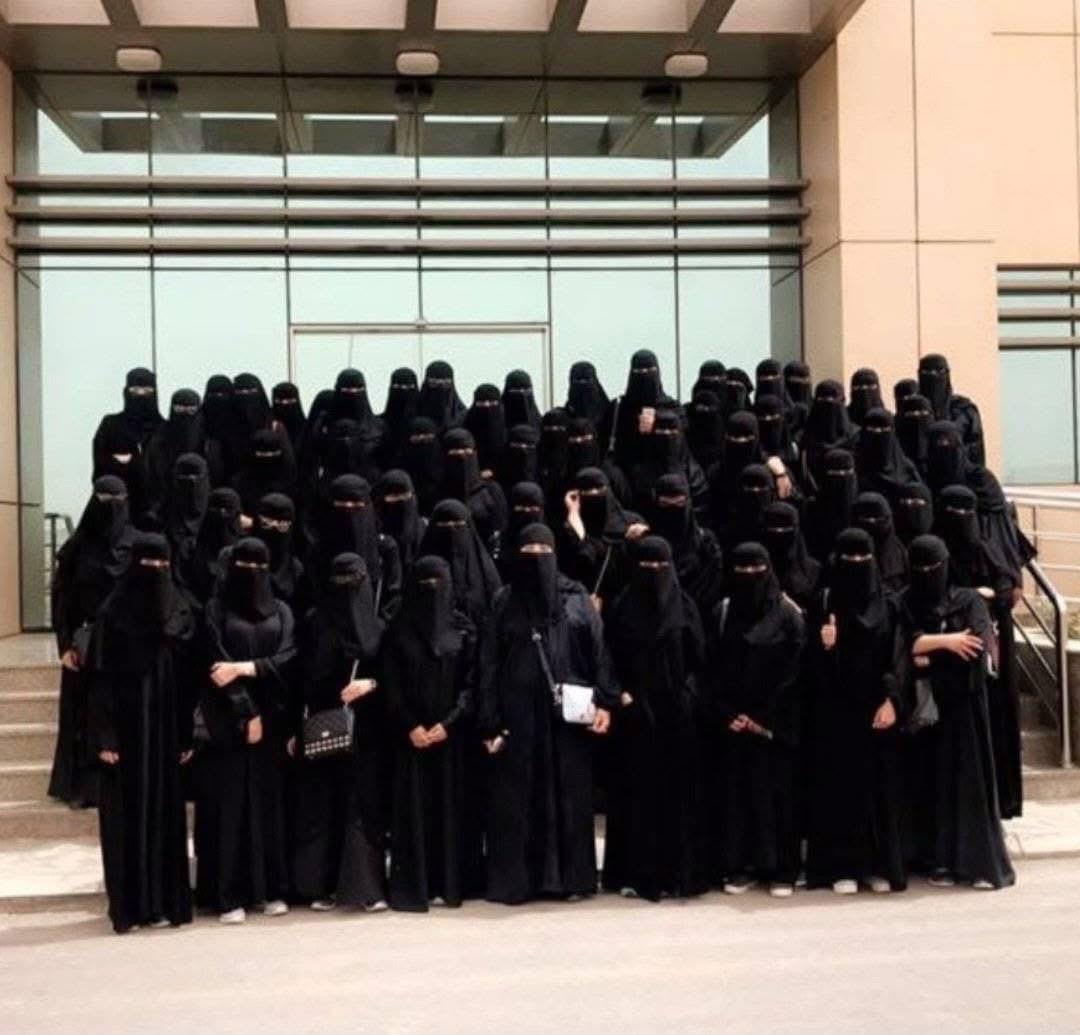
This photograph arrests the eye at first glance with something bordering on the absurd โ€” a reaction that quickly dissolves into a quieter, more unsettling emotion once the mind begins to reckon with what lies beneath the surface of the image.

Photography, in its very essence, is a visual covenant with memory. It is humanityโ€™s instinct to freeze a moment in time, to preserve the face of a companion, to bear witness to a chapter of life shared with those who walked alongside us. Yet that fundamental purpose collapses entirely when there are no faces to preserve โ€” when every trace of individual identity is subsumed beneath a uniform veil of black, leaving nothing that distinguishes one soul from another. What memory, then, is being kept? What record is being made, when the record itself cannot tell its subjects apart?

And yet โ€” herein lies the deeper poignancy of this image โ€” these young women are reaching, unmistakably, for one of the most ancient and universal of human impulses: the desire to celebrate the self, to mark a milestone, to say we were here, together, and this moment mattered and please see us, look at us, and bear witness that we are here. The human spirit, it seems, will always find a way to assert itself, even when the social order has stripped away the very instruments through which that assertion is most naturally made.

This photograph, I would argue, is far more than a candid snapshot. It is a sociological document โ€” a vivid portrait of the enduring collision between a calcified reading of religion and the irreducible nature of the human being. It illustrates, with striking clarity, how a person can become a willing captive of collective consciousness, imprisoned not by force, but by the dogma of a society that has ceased to examine itself.

It is worth noting, with some precision, that the niqab โ€” and I would add the hijab in general โ€” has never constituted a doctrinal pillar of Islamic theology, nor a defining feature of Islamic civilization at its height. It emerged as a social and historical practice, born of particular contexts, and was largely left by classical Islamic jurisprudence within the domain of custom and individual discretion. That such a practice should not only persist but intensify in an era that calls for the emancipation of the individual, for the celebration of human dignity in its full and visible form, and for the transcendence of both repressive and objectifying views of the human body โ€” this is what can only be described as social regression.

It has become, regrettably, one of the more telling markers of stagnation in certain Muslim societies: the stubborn insistence on resurrecting what ought to have been allowed to fade gracefully, as all social customs eventually must when they fall out of step with the forward march of human consciousness and the evolving moral imagination of civilization.โ€‹โ€‹โ€‹โ€‹โ€‹โ€‹โ€‹โ€‹โ€‹โ€‹โ€‹โ€‹โ€‹โ€‹โ€‹โ€‹

I hope that these girls are the last generation who would think that in the appearance of their face, which is the face of God, any shame or wrong.

ุจูŠู† ุงู„ู…ูุงุฑู‚ุฉ ุงู„ุจุตุฑูŠุฉ ูˆุฃุฒู…ุฉ ุงู„ู‡ูˆูŠุฉ

ุชุณุชูˆู‚ููƒ ู‡ุฐู‡ ุงู„ุตูˆุฑุฉ ู„ู„ูˆู‡ู„ุฉ ุงู„ุฃูˆู„ู‰ ุจู…ุง ุชุซูŠุฑู‡ ู…ู† ุฏู‡ุดุฉ ุชูƒุงุฏ ุชุจู„ุบ ุญุฏู‘ ุงู„ุฅุถุญุงูƒุŒ ุซู… ุณุฑุนุงู† ู…ุง ุชู†ู‚ู„ุจ ุชู„ูƒ ุงู„ุฏู‡ุดุฉ ุฅู„ู‰ ุดูŠุก ุฃู‚ุฑุจ ุฅู„ู‰ ุงู„ุญุฒู† ุงู„ุตุงู…ุชุŒ ุญูŠู† ูŠุชุฃู…ู„ ุงู„ุนู‚ู„ ู…ุง ูˆุฑุงุก ุงู„ู…ุดู‡ุฏ ู…ู† ุชู†ุงู‚ุถ ุตุงุฑุฎ.

ูุงู„ุตูˆุฑุฉ ุงู„ููˆุชูˆุบุฑุงููŠุฉ ููŠ ุฌูˆู‡ุฑู‡ุง ูˆุซูŠู‚ุฉูŒ ุจุตุฑูŠุฉ ู„ู„ุฐุงูƒุฑุฉ ุงู„ุฅู†ุณุงู†ูŠุฉุŒ ูˆุดุงู‡ุฏูŒ ุนู„ู‰ ู„ุญุธุฉ ุนุงุดู‡ุง ุงู„ุฅู†ุณุงู† ูˆุฃุฑุงุฏ ุฃู† ูŠูุฎู„ู‘ุฏู‡ุง. ุจูŠุฏ ุฃู† ู‡ุฐู‡ ุงู„ูˆุธูŠูุฉ ุงู„ุฌูˆู‡ุฑูŠุฉ ุชุชู‡ุงูˆู‰ ูˆุชู†ุชููŠ ุญูŠู† ุชู†ุนุฏู… ุงู„ู…ู„ุงู…ุญ ูƒู„ูŠุงู‹ ุฎู„ู ุญุฌุงุจ ุฃุณูˆุฏ ู„ุง ูŠูุจู‚ูŠ ู„ู„ู‡ูˆูŠุฉ ุงู„ุจุตุฑูŠุฉ ุฃุซุฑุงู‹. ูุฃูŠู‘ ุฐูƒุฑู‰ ุชู„ูƒ ุงู„ุชูŠ ู„ุง ุชุญู…ู„ ูˆุฌู‡ุงู‹ุŸ ูˆุฃูŠู‘ ุชูˆุซูŠู‚ ุฐู„ูƒ ุงู„ุฐูŠ ู„ุง ูŠูู…ูŠู‘ุฒ ุจูŠู† ุตุงุญุจู‡ ูˆุณูˆุงู‡ุŸ

ุบูŠุฑ ุฃู† ู…ุง ูŠุณุชุญู‚ ุงู„ุชุฃู…ู„ ุงู„ุนู…ูŠู‚ ู‡ูˆ ุฃู† ู‡ุคู„ุงุก ุงู„ูุชูŠุงุช ูŠุญุงูˆู„ู† โ€”ุฑุบู… ูƒู„ ุงู„ู‚ูŠูˆุฏโ€” ุฃู† ูŠูู…ุงุฑุณู† ูˆุงุญุฏุงู‹ ู…ู† ุฃุนู…ู‚ ุงู„ูุทุฑ ุงู„ุฅู†ุณุงู†ูŠุฉ: ุงู„ุงุญุชูุงุก ุจุงู„ุฐุงุชุŒ ูˆุงู„ุชูˆุซูŠู‚ ู„ู„ุฑูู‚ุฉุŒ ูˆุงู„ุดู‡ุงุฏุฉ ุนู„ู‰ ู…ุฑุญู„ุฉ ู…ู† ู…ุฑุงุญู„ ุงู„ุญูŠุงุฉ ู…ุน ู…ู† ุดุงุฑูƒูˆู‡ู† ู…ุณูŠุฑุชู‡ุง. ูˆู‡ูˆ ู…ุง ูŠูƒุดู ุฃู† ุงู„ุฑูˆุญ ุงู„ุฅู†ุณุงู†ูŠุฉ ุชุธู„ ุชู†ุงุถู„ ูˆุชุดู‚ ุทุฑูŠู‚ู‡ุง ู†ุญูˆ ุงู„ุชุนุจูŠุฑ ุนู† ู†ูุณู‡ุงุŒ ุญุชู‰ ุญูŠู† ุชูุตุงุฏุฑ ุงู„ุฃุนุฑุงู ุงู„ุงุฌุชู…ุงุนูŠุฉ ุฃุฏูˆุงุชู‡ุง ุงู„ุฃุตูŠู„ุฉ. ู†ุญู† ู‡ู†ุง! ุงู†ุธุฑูˆุง ุงู„ูŠู†ุง! ุฃู†ุง ู‡ู†ุง! ุดุงู‡ุฏู†ูŠ!

ุฅู† ู‡ุฐู‡ ุงู„ุตูˆุฑุฉุŒ ููŠ ุชู‚ุฏูŠุฑูŠุŒ ู„ูŠุณุช ู…ุฌุฑุฏ ู…ุดู‡ุฏ ุนุงุจุฑุŒ ุจู„ ู‡ูŠ ูˆุซูŠู‚ุฉ ุณูˆุณูŠูˆู„ูˆุฌูŠุฉ ุชุฌุณู‘ุฏ ุงู„ุตุฑุงุน ุงู„ุฃุฒู„ูŠ ุจูŠู† ุงู„ูู‡ู… ุงู„ู…ุชุญุฌุฑ ู„ู„ุฏูŠู† ูˆุจูŠู† ุงู„ุทุจูŠุนุฉ ุงู„ุฅู†ุณุงู†ูŠุฉ ุงู„ุฑุงุณุฎุฉ. ุฅู†ู‡ุง ุชูู…ุซู‘ู„ ู†ู…ูˆุฐุฌุงู‹ ุตุงุฑุฎุงู‹ ู„ูƒูŠููŠุฉ ุชุญูˆู‘ู„ ุงู„ุฅู†ุณุงู† ุฅู„ู‰ ุถุญูŠุฉ ู„ุนู‚ู„ู‡ ุงู„ุฌู…ุนูŠุŒ ูˆุฃุณูŠุฑ ู„ุฏูˆุบู…ุงุฆูŠุฉ ุงู„ู…ุฌุชู…ุน ุญูŠู† ูŠุชูˆู‚ู ุนู† ุงู„ู…ุฑุงุฌุนุฉ ุงู„ู†ู‚ุฏูŠุฉ ู„ู…ูˆุฑูˆุซุงุชู‡.

ูˆุงู„ุฌุฏูŠุฑ ุจุงู„ู…ู„ุงุญุธุฉ ุฃู† ุงู„ู†ู‚ุงุจ โ€”ุจู„ ูˆุงู„ุญุฌุงุจ ุจุดูƒู„ ุนุงู… – ู„ู… ูŠูƒู† ูŠูˆู…ุงู‹ ุฑูƒู†ุงู‹ ู…ู† ุฃุฑูƒุงู† ุงู„ุนู‚ูŠุฏุฉ ุงู„ุฅุณู„ุงู…ูŠุฉ ูˆู„ุง ุณู…ุฉู‹ ุฌูˆู‡ุฑูŠุฉ ู…ู† ุณู…ุงุช ู‡ูˆูŠุชู‡ุง ุงู„ุญุถุงุฑูŠุฉุŒ ุจู‚ุฏุฑ ู…ุง ูƒุงู† ู…ู…ุงุฑุณุฉู‹ ุงุฌุชู…ุงุนูŠุฉ ุชุงุฑูŠุฎูŠุฉ ู†ุดุฃุช ููŠ ุณูŠุงู‚ุงุชู‡ุง ุงู„ุฎุงุตุฉุŒ ูˆุชุฑูƒู‡ุง ุงู„ูู‚ู‡ ุงู„ุฅุณู„ุงู…ูŠ ููŠ ุฏุงุฆุฑุฉ ุงู„ุงุฌุชู‡ุงุฏ ูˆุงู„ุนุฑู. ุฃู…ุง ุฃู† ุชุณุชู…ุฑ ู‡ุฐู‡ ุงู„ู…ู…ุงุฑุณุฉ ูˆุชุชุฑุณู‘ุฎ ููŠ ุฒู…ู† ูŠุฏุนูˆ ุฅู„ู‰ ุชุญุฑูŠุฑ ุงู„ุฅู†ุณุงู† ูˆุธู‡ูˆุฑู‡ ุจูƒุงู…ู„ ูƒูŠู†ูˆู†ุชู‡ุŒ ูˆุชุฌุงูˆุฒ ุงู„ู†ุธุฑุฉ ุงู„ู‚ู…ุนูŠุฉ ูˆุงู„ุดู‡ูˆูŠุฉ ููŠ ุขู†ู ู…ุนุงู‹ุŒ ูุฐู„ูƒ ู…ุง ู„ุง ูŠูุนุจู‘ุฑ ุนู†ู‡ ุฅู„ุง ุจู…ุตุทู„ุญ ุงู„ุฑุฌุนูŠุฉ ุงู„ุงุฌุชู…ุงุนูŠุฉุ› ุชู„ูƒ ุงู„ุธุงู‡ุฑุฉ ุงู„ุชูŠ ุจุงุชุช ุนู„ุงู…ุฉู‹ ูุงุฑู‚ุฉ ููŠ ุชุฎู„ู ุจุนุถ ุงู„ู…ุฌุชู…ุนุงุช ุงู„ู…ุณู„ู…ุฉุŒ ุญูŠู† ุชูุตุฑู‘ ุนู„ู‰ ุฅุญูŠุงุก ู…ุง ูƒุงู† ูŠู†ุจุบูŠ ุฃู† ุชุชุฑูƒู‡ ูŠู…ูˆุช ู…ูŠุชุฉู‹ ุทุจูŠุนูŠุฉุŒ ูƒุณุงุฆุฑ ุงู„ุนุงุฏุงุช ุงู„ุงุฌุชู…ุงุนูŠุฉ ุงู„ุชูŠ ูŠูู„ุบูŠู‡ุง ุชู‚ุงุฏู… ุงู„ุฒู…ู† ูˆุชุทูˆุฑ ุงู„ูˆุนูŠ ุงู„ุฅู†ุณุงู†ูŠ.โ€‹โ€‹โ€‹โ€‹โ€‹โ€‹โ€‹โ€‹โ€‹โ€‹โ€‹โ€‹โ€‹โ€‹โ€‹โ€‹

ุฃุฑุฌูˆ ุงู† ุชูƒูˆู† ู‡ุคู„ุงุก ุงู„ูุชูŠุงุช ุขุฎุฑ ุฌูŠู„ ูŠุธู† ุงู† ููŠ ุธู‡ูˆุฑ ูˆุฌู‡ ุงู„ุฅู†ุณุงู†ุŒ ูˆู‡ูˆ ูˆุฌู‡ ุงู„ู„ู‡ุŒ ุงูŠ ุนูŠุจ ุงูˆ ู…ูƒุฑูˆู‡.

Between Visual Paradox and the Crisis of Identity

This photograph arrests the eye at first glance with something bordering on the absurd โ€” a reaction that quickly dissolves into a quieter, more unsettling emotion once the mind begins to reckon with what lies beneath the surface of the image.

Photography, in its very essence, is a visual covenant with memory. It is humanityโ€™s instinct to freeze a moment in time, to preserve the face of a companion, to bear witness to a chapter of life shared with those who walked alongside us. Yet that fundamental purpose collapses entirely when there are no faces to preserve โ€” when every trace of individual identity is subsumed beneath a uniform veil of black, leaving nothing that distinguishes one soul from another. What memory, then, is being kept? What record is being made, when the record itself cannot tell its subjects apart?

And yet โ€” herein lies the deeper poignancy of this image โ€” these young women are reaching, unmistakably, for one of the most ancient and universal of human impulses: the desire to celebrate the self, to mark a milestone, to say we were here, together, and this moment mattered and please see us, look at us, and bear witness that we are here. The human spirit, it seems, will always find a way to assert itself, even when the social order has stripped away the very instruments through which that assertion is most naturally made.

This photograph, I would argue, is far more than a candid snapshot. It is a sociological document โ€” a vivid portrait of the enduring collision between a calcified reading of religion and the irreducible nature of the human being. It illustrates, with striking clarity, how a person can become a willing captive of collective consciousness, imprisoned not by force, but by the dogma of a society that has ceased to examine itself.

It is worth noting, with some precision, that the niqab โ€” and I would add the hijab in general โ€” has never constituted a doctrinal pillar of Islamic theology, nor a defining feature of Islamic civilization at its height. It emerged as a social and historical practice, born of particular contexts, and was largely left by classical Islamic jurisprudence within the domain of custom and individual discretion. That such a practice should not only persist but intensify in an era that calls for the emancipation of the individual, for the celebration of human dignity in its full and visible form, and for the transcendence of both repressive and objectifying views of the human body โ€” this is what can only be described as social regression.

It has become, regrettably, one of the more telling markers of stagnation in certain Muslim societies: the stubborn insistence on resurrecting what ought to have been allowed to fade gracefully, as all social customs eventually must when they fall out of step with the forward march of human consciousness and the evolving moral imagination of civilization.โ€‹โ€‹โ€‹โ€‹โ€‹โ€‹โ€‹โ€‹โ€‹โ€‹โ€‹โ€‹โ€‹โ€‹โ€‹โ€‹

I hope that these girls are the last generation who would think that in the appearance of their face, which is the face of God, any shame or wrong.

wcharaf