
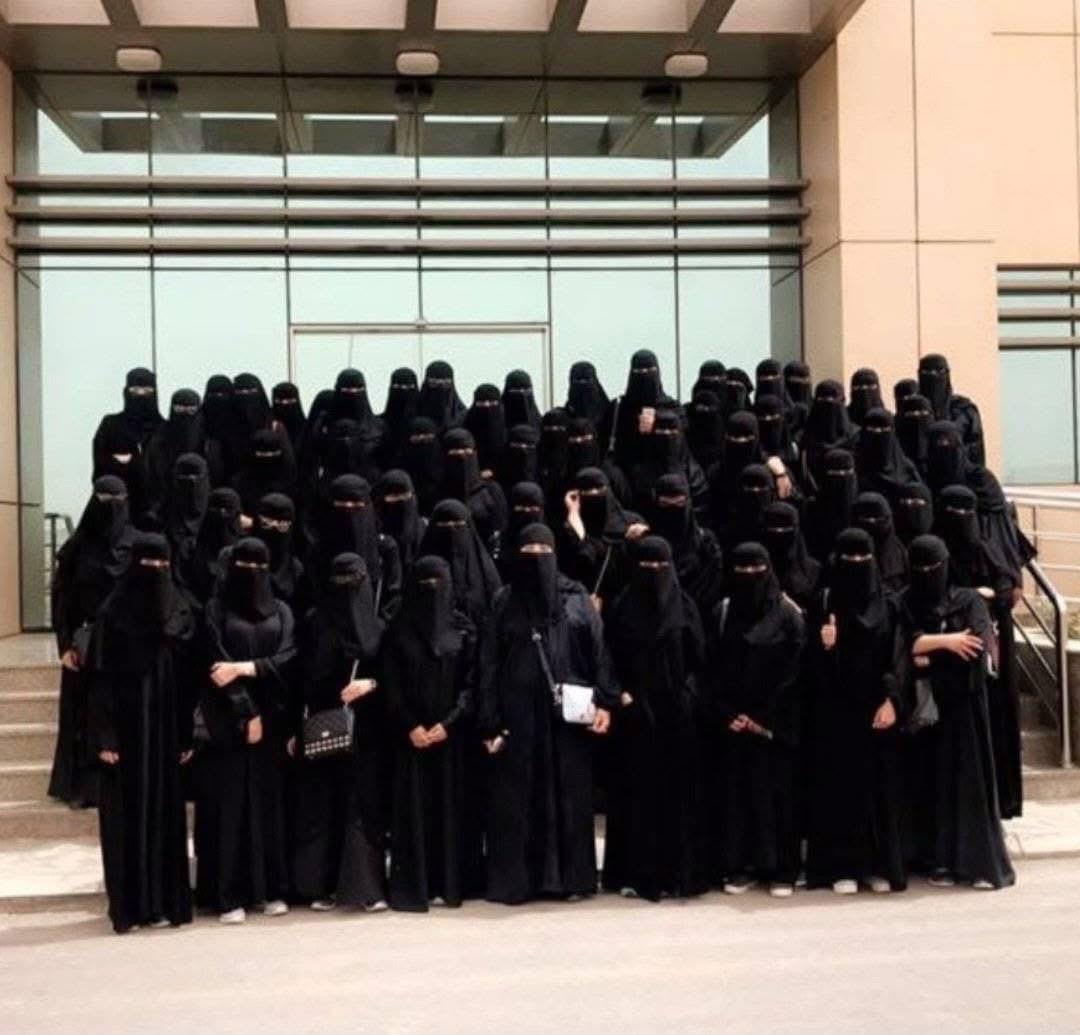
This photograph arrests the eye at first glance with something bordering on the absurd — a reaction that quickly dissolves into a quieter, more unsettling emotion once the mind begins to reckon with what lies beneath the surface of the image.
Photography, in its very essence, is a visual covenant with memory. It is humanity’s instinct to freeze a moment in time, to preserve the face of a companion, to bear witness to a chapter of life shared with those who walked alongside us. Yet that fundamental purpose collapses entirely when there are no faces to preserve — when every trace of individual identity is subsumed beneath a uniform veil of black, leaving nothing that distinguishes one soul from another. What memory, then, is being kept? What record is being made, when the record itself cannot tell its subjects apart?
And yet — herein lies the deeper poignancy of this image — these young women are reaching, unmistakably, for one of the most ancient and universal of human impulses: the desire to celebrate the self, to mark a milestone, to say we were here, together, and this moment mattered and please see us, look at us, and bear witness that we are here. The human spirit, it seems, will always find a way to assert itself, even when the social order has stripped away the very instruments through which that assertion is most naturally made.
This photograph, I would argue, is far more than a candid snapshot. It is a sociological document — a vivid portrait of the enduring collision between a calcified reading of religion and the irreducible nature of the human being. It illustrates, with striking clarity, how a person can become a willing captive of collective consciousness, imprisoned not by force, but by the dogma of a society that has ceased to examine itself.
It is worth noting, with some precision, that the niqab — and I would add the hijab in general — has never constituted a doctrinal pillar of Islamic theology, nor a defining feature of Islamic civilization at its height. It emerged as a social and historical practice, born of particular contexts, and was largely left by classical Islamic jurisprudence within the domain of custom and individual discretion. That such a practice should not only persist but intensify in an era that calls for the emancipation of the individual, for the celebration of human dignity in its full and visible form, and for the transcendence of both repressive and objectifying views of the human body — this is what can only be described as social regression.
It has become, regrettably, one of the more telling markers of stagnation in certain Muslim societies: the stubborn insistence on resurrecting what ought to have been allowed to fade gracefully, as all social customs eventually must when they fall out of step with the forward march of human consciousness and the evolving moral imagination of civilization.
I hope that these girls are the last generation who would think that in the appearance of their face, which is the face of God, any shame or wrong.
بين المفارقة البصرية وأزمة الهوية
تستوقفك هذه الصورة للوهلة الأولى بما تثيره من دهشة تكاد تبلغ حدّ الإضحاك، ثم سرعان ما تنقلب تلك الدهشة إلى شيء أقرب إلى الحزن الصامت، حين يتأمل العقل ما وراء المشهد من تناقض صارخ.
فالصورة الفوتوغرافية في جوهرها وثيقةٌ بصرية للذاكرة الإنسانية، وشاهدٌ على لحظة عاشها الإنسان وأراد أن يُخلّدها. بيد أن هذه الوظيفة الجوهرية تتهاوى وتنتفي حين تنعدم الملامح كلياً خلف حجاب أسود لا يُبقي للهوية البصرية أثراً. فأيّ ذكرى تلك التي لا تحمل وجهاً؟ وأيّ توثيق ذلك الذي لا يُميّز بين صاحبه وسواه؟
غير أن ما يستحق التأمل العميق هو أن هؤلاء الفتيات يحاولن —رغم كل القيود— أن يُمارسن واحداً من أعمق الفطر الإنسانية: الاحتفاء بالذات، والتوثيق للرفقة، والشهادة على مرحلة من مراحل الحياة مع من شاركوهن مسيرتها. وهو ما يكشف أن الروح الإنسانية تظل تناضل وتشق طريقها نحو التعبير عن نفسها، حتى حين تُصادر الأعراف الاجتماعية أدواتها الأصيلة. نحن هنا! انظروا الينا! أنا هنا! شاهدني!
إن هذه الصورة، في تقديري، ليست مجرد مشهد عابر، بل هي وثيقة سوسيولوجية تجسّد الصراع الأزلي بين الفهم المتحجر للدين وبين الطبيعة الإنسانية الراسخة. إنها تُمثّل نموذجاً صارخاً لكيفية تحوّل الإنسان إلى ضحية لعقله الجمعي، وأسير لدوغمائية المجتمع حين يتوقف عن المراجعة النقدية لموروثاته.
والجدير بالملاحظة أن النقاب —بل والحجاب بشكل عام – لم يكن يوماً ركناً من أركان العقيدة الإسلامية ولا سمةً جوهرية من سمات هويتها الحضارية، بقدر ما كان ممارسةً اجتماعية تاريخية نشأت في سياقاتها الخاصة، وتركها الفقه الإسلامي في دائرة الاجتهاد والعرف. أما أن تستمر هذه الممارسة وتترسّخ في زمن يدعو إلى تحرير الإنسان وظهوره بكامل كينونته، وتجاوز النظرة القمعية والشهوية في آنٍ معاً، فذلك ما لا يُعبّر عنه إلا بمصطلح الرجعية الاجتماعية؛ تلك الظاهرة التي باتت علامةً فارقة في تخلف بعض المجتمعات المسلمة، حين تُصرّ على إحياء ما كان ينبغي أن تتركه يموت ميتةً طبيعية، كسائر العادات الاجتماعية التي يُلغيها تقادم الزمن وتطور الوعي الإنساني.
أرجو ان تكون هؤلاء الفتيات آخر جيل يظن ان في ظهور وجه الإنسان، وهو وجه الله، اي عيب او مكروه.
Between Visual Paradox and the Crisis of Identity
This photograph arrests the eye at first glance with something bordering on the absurd — a reaction that quickly dissolves into a quieter, more unsettling emotion once the mind begins to reckon with what lies beneath the surface of the image.
Photography, in its very essence, is a visual covenant with memory. It is humanity’s instinct to freeze a moment in time, to preserve the face of a companion, to bear witness to a chapter of life shared with those who walked alongside us. Yet that fundamental purpose collapses entirely when there are no faces to preserve — when every trace of individual identity is subsumed beneath a uniform veil of black, leaving nothing that distinguishes one soul from another. What memory, then, is being kept? What record is being made, when the record itself cannot tell its subjects apart?
And yet — herein lies the deeper poignancy of this image — these young women are reaching, unmistakably, for one of the most ancient and universal of human impulses: the desire to celebrate the self, to mark a milestone, to say we were here, together, and this moment mattered and please see us, look at us, and bear witness that we are here. The human spirit, it seems, will always find a way to assert itself, even when the social order has stripped away the very instruments through which that assertion is most naturally made.
This photograph, I would argue, is far more than a candid snapshot. It is a sociological document — a vivid portrait of the enduring collision between a calcified reading of religion and the irreducible nature of the human being. It illustrates, with striking clarity, how a person can become a willing captive of collective consciousness, imprisoned not by force, but by the dogma of a society that has ceased to examine itself.
It is worth noting, with some precision, that the niqab — and I would add the hijab in general — has never constituted a doctrinal pillar of Islamic theology, nor a defining feature of Islamic civilization at its height. It emerged as a social and historical practice, born of particular contexts, and was largely left by classical Islamic jurisprudence within the domain of custom and individual discretion. That such a practice should not only persist but intensify in an era that calls for the emancipation of the individual, for the celebration of human dignity in its full and visible form, and for the transcendence of both repressive and objectifying views of the human body — this is what can only be described as social regression.
It has become, regrettably, one of the more telling markers of stagnation in certain Muslim societies: the stubborn insistence on resurrecting what ought to have been allowed to fade gracefully, as all social customs eventually must when they fall out of step with the forward march of human consciousness and the evolving moral imagination of civilization.
I hope that these girls are the last generation who would think that in the appearance of their face, which is the face of God, any shame or wrong.

