Blueprint or Band-Aid? Why Thomas Barrack’s โ€œLevant Peaceโ€ Pitch Misses the Mark

Who Is Tom Barrack, and Why His โ€œLevant Peaceโ€ Vision Matters Now

Thomas J. Barrack Jr. is not a diplomat by training, nor an academic specialist in Middle Eastern affairs. He is a billionaire real-estate investor, founder of Colony Capital, longtime confidant of Donald J. Trump, and one of the architects behind the Trump Administrationโ€™s Middle East economic agenda during its first term. In Washington and Riyadh circles he is often described as a bridge-builder between American capital and Gulf monarchies, a man who speaks the language of both high finance and regional power.

Barrackโ€™s latest essay, โ€œA Personal Perspective โ€“ Syria and Lebanon Are the Next Pieces for Levant Peace,โ€ published in mid-October 2025, positions him as an unofficial herald of the Trump-era return to Middle Eastern grand strategy.ยน The article praises the October 13 Sharm el-Sheikh summitโ€”where world leaders endorsed President Trumpโ€™s โ€œTwenty-Point Visionโ€ for renewal and reconstructionโ€”as a turning point toward what Barrack calls an โ€œarchitecture of peace.โ€ In his telling, the Gaza ceasefire was merely the overture; the next movements are the stabilization of Syria and the disarmament of Hezbollah in Lebanon.

Politically, his piece lands at a charged moment. The Trump administration, restored to power after the 2024 election, has revived the Abraham Accords framework and expanded it into a broader โ€œLevant Peace Initiative,โ€ aimed at drawing Syria, Lebanon, and eventually Iraq into normalization with Israel. At the same time, Washington has begun to roll back sanctions on Damascus, arguing that the โ€œnew Syrian governmentโ€ formed in December 2024 warrants economic reintegration.ยฒ Meanwhile, U.S. and French envoys are pressing Beirut to curb Hezbollahโ€™s influence and accept a phased disarmament plan linked to Gulf reconstruction aid.ยณ

Barrack casts these developments as historic progress: sanctions transformed into investment, militias replaced by โ€œlegitimate forces,โ€ and regional alignment against Iran framed as moral renewal. He praises Congress for moving toward repeal of the Caesar Syria Civilian Protection Act and urges Lebanon to โ€œalign with the anti-terrorist rhythm of its region.โ€โด

The subtext, however, is unmistakably political. His essay serves as a soft-power extension of the Trump administrationโ€™s broader projectโ€”using economic incentives and normalization deals to reshape the Middle East without addressing the root causes of instability: occupation, inequality, and foreign interference. In this light, โ€œLevant Peaceโ€ reads less like a diplomatic blueprint and more like a shareholderโ€™s prospectus for a new U.S.-led regional order.

From our Arabic perspective โ€” grounded in the principles of human dignity, honor, and sovereignty, anti-imperialism, and self-determination โ€” Tom Barrackโ€™s piece is an elegant mask on a deeply colonial argument. It recycles the same logic that has long underwritten Western interventions in the Middle East: that peace can be engineered from Washington or Tel Aviv, that Arab nations must โ€œproveโ€ their modernity by aligning with American-Israeli strategic goals, and that sovereignty is a gift bestowed from the outside rather than a right defended from within.

Barrackโ€™s prose is honeyed, but the poison is in the premise. Letโ€™s take it apart.


1. The โ€œTrump Doctrineโ€ as benevolent empire

Barrack frames Trumpโ€™s โ€œtwenty-point planโ€ as a renewal of the region โ€” a โ€œbold visionโ€ replacing โ€œfear with optimism.โ€ Yet, in practice, this โ€œvisionโ€ mirrors the logic of the Abraham Accords: peace without justice, normalization without liberation, reconstruction on the skulls of children. The Palestinians, whose dispossession is the moral and political nucleus of the regionโ€™s conflict, are reduced to scenery in a Trumpian tableau of โ€œprosperity.โ€

He claims Gazaโ€™s ceasefire marks the start of a โ€œmosaic of partnership,โ€ but ignores the grotesque asymmetry of power at play: With about 200,000 tons of explosives… equivalent to 13 nuclear bombs, Gaza was bombed into submission , not invited into cooperation. To praise โ€œpeace through shared opportunityโ€ while hundreds of thousands remain displaced, starved, or buried under rubble, is to mistake silence for harmony.

This is not diplomacy โ€” it is damage control for genocide, ethnic cleansing, and war crimes dressed in corporate language.

The first item of business is to set war crime tribunals and arrest Netenyahu. Is to stop the famine and reduce the risk of death for the 100’s of thousands of children, women, and men of Gaza. Is to provide shelter, and bury the dead, and bring healthy water and medicine. Is to release all palestinian hostages that are being raped and tortured, eyes blinded with electricity, legs amputated after torture, and faces implanted with the israeli version of swastikas. There is no diplomacy amidst a Genocide unless you count Arabs as you counted buffalos in the newly discovered Turtle Island.


2. Syria: Sanctions are not the central problem โ€” sovereignty is

Barrackโ€™s call to repeal the Caesar Act seems, on the surface, humane. Indeed, U.S. sanctions have crippled civilians far more than elites, and ending them could be a step toward recovery. But Barrackโ€™s reasoning is not humanitarian; itโ€™s transactional. He describes the repeal as โ€œstrategy,โ€ a way to โ€œunlock investors,โ€ โ€œunleash reconstruction,โ€ and โ€œsignal to allies.โ€ In other words, he wants Syria reopened to Western and Gulf capital โ€” not to Syrian agency.

When he praises the โ€œnew Syrian governmentโ€ that arose after December 8, 2024, he treats it as if Damascus were rebooted like a corporate board, conveniently absolving the same foreign powers who weaponized sanctions and proxy wars in the first place. True recovery cannot come from conditional Western โ€œpartnershipsโ€ tied to alignment with Israelโ€™s regional framework. It must come from the Syrian people determining their political future free of imperial bargaining.

Also, there is total ignoring of the war crime of an expanded occupation of Syria in 2024. Barack didn’t mention the grave breaches of international humanitarian law, specifically theย Fourth Geneva Convention, nor the war crime of forced displacement of Syrian civiliansย from their homes (prohibited under Article 49 of the Fourth Geneva Convention), the extensive and unjustifiedย destruction and confiscation of civilian propertyย and agricultural land not required by absolute military necessity, and theย unlawful transfer of Syrian detainees into Israeli territory. Furthermore, the establishment of permanent military control and the stated intent to hold the territory indefinitely violate the principle that occupation is a temporary state and that acquiring territory by force is illegal under the UN Charter, with such actions also potentially amounting to a crime of aggression.

Golan Heights which has been since 1967 under long-standing occupation covers about 1,200 sq km (460 sq mi), but since the collapse of the Assad regime in December 2024, Israel has expanded its control into the UN Disengagement Observer Force (UNDOF) buffer zone and surrounding parts of the Quneitra and Daraa governorates with an incursion zone reaching approximately 600 sq km. This expansion has brought the total occupied Syrian land mass to well over 1,700 sq km, which is almost triple the size of the country of Bahrain.


3. Lebanon: A sovereign nation, not an Israeli security project

Barrackโ€™s prescription for Lebanon is the most revealing โ€” and the most dangerous. He calls Hizballahโ€™s disarmament โ€œLebanonโ€™s opportunity for renewal,โ€ framing it as both an Israeli security need and an American economic incentive. He argues that U.S. and French โ€œoversightโ€ of Lebanese reconstruction, tied to disarmament, is a path to sovereignty. This is doublethink.

No genuine sovereignty can coexist with conditions imposed by foreign powers. To demand that Lebanon โ€œalign with the anti-terrorist rhythm of its regionโ€ โ€” meaning, align with U.S. and Israeli military objectives โ€” is to erase the countryโ€™s complex pluralism and replace it with a single acceptable rhythm: obedience.

The core of Lebanonโ€™s paralysis is not Hizballah alone but the continuous and daily state terrorism practiced by Israel on South Lebanon since 1978, including 4 invasions one of which took over the Capital city of Beirut, and the sectarian system created by French colonial design, sustained by Saudi and Western patronage, and manipulated by Washington whenever convenient. To single out Hizballahโ€™s weapons as the cause of all Lebanese decay is a false simplification. The real question is why the U.S. and its allies continue to block Lebanonโ€™s economic recovery and political reform unless it conforms to Israelโ€™s definition of โ€œpeace.โ€


4. Iran as eternal villain

Barrackโ€™s essay requires a perpetual antagonist โ€” and Iran fits perfectly. He paints the Islamic Republic as โ€œterminally weakened, morally bankrupt, and treacherous,โ€ a kind of necessary evil whose eradication justifies every American maneuver. This caricature allows him to frame Trumpโ€™s peace plan as anti-terrorism rather than anti-sovereignty. Yet the reality is that Iranโ€™s influence in the Levant exists largely because of U.S. and Israeli wars that shattered Iraq, strangled Syria, and left power vacuums across the region. Iranโ€™s influence in Lebanon, in many respects, grounded in legitimate social and political realities inside Lebanon itself. It cannot be reduced to an external โ€œimpositionโ€ or mere โ€œproxy control.โ€ For a large portion of the Lebanese population โ€” particularly within the Shiite community that constitutes roughly a third of the country โ€” Iranโ€™s relationship with Lebanon represents both protection and empowerment in a political system historically designed to marginalize them.

After decades of neglect by Lebanonโ€™s post-colonial elite and repeated Israeli invasions, Iranโ€™s alliance with Hezbollah offered something no other foreign or domestic actor did: effective resistance, social infrastructure, and dignity for the countryโ€™s poorest and most war-torn regions. The relationship that developed between Iran and Hezbollah after Israelโ€™s 1982 invasion was not forced upon Lebanon; it was welcomed by communities who had lost faith in a fractured central government and in Western powers that had consistently backed aggressors rather than victims.

Beyond military capacity, Iranโ€™s role has included financing hospitals, schools, reconstruction projects, and fuel shipments during Lebanonโ€™s 2021 energy crisis โ€” tangible support that many Lebanese citizens experienced directly while their own government remained paralyzed. These initiatives built a popular base that sees the Iran-Hezbollah axis not merely as a foreign extension of Tehranโ€™s power, but as a domestic safety net and political voice in a deeply unequal system.

Itโ€™s crucial to remember that Hezbollah is not just an armed group; it is a major political party with elected representatives, cabinet ministers, and alliances that stretch beyond sectarian lines. While its military role remains controversial even within Lebanon, its social and political legitimacy is undeniable. Its partnership with Iran has sustained it, but it is Lebanese society itself โ€” through votes, volunteer networks, and grassroots institutions โ€” that continually renews that legitimacy.

To frame Iranian influence as inherently destabilizing is to ignore that it emerged as a response to repeated foreign invasions, Western-backed isolation, and a state that failed to provide basic security and equality. For many Lebanese citizens, the Iran-Hezbollah relationship embodies self-defense, sovereignty, and resistance to hegemony โ€” values deeply resonant across the Arab world today.

In short: Iranโ€™s influence in Lebanon, while not universally supported, is not simply manipulation from abroad. It reflects the lived experiences and aspirations of a significant portion of the Lebanese population who view resistance not as extremism, but as survival โ€” and sovereignty not as alignment with Washington, but as freedom from domination in all its forms.

One cannot destroy the neighborhood, then blame the neighbors who pick up the pieces.


5. The myth of economic salvation

Barrack repeatedly equates โ€œcommerceโ€ with peace, insisting that trade and investment are โ€œthe bridge from conflict to coexistence.โ€ But this assumes that inequality and occupation can be cured by capital influx. In truth, economic integration without justice only cements dependency. The same logic built the neoliberal disasters of post-war Iraq and the failed privatization experiments in Egypt.

When capital comes before dignity, reconstruction becomes recolonization โ€” a process where the same foreign investors who financed wars profit from rebuilding what they destroyed.


6. Peace without liberation is submission

Barrackโ€™s final flourish about a โ€œrenewed mosaicโ€ and โ€œcentury of conflict giving way to cooperationโ€ is poetic theater. What he calls โ€œcooperationโ€ is, in reality, normalization with apartheid and alignment under U.S. hegemony. He confuses pacification for peace. The Green Party, human rights advocates, and the Arab peoples themselves see through this. Real peace requires equality before the law, not equality before the dollar.

A Syria or Lebanon that kneels before Washingtonโ€™s โ€œprosperity planโ€ is not reborn โ€” it is re-colonized.


7. Our perspective: sovereignty and justice first

From the standpoint of those committed to human rights and anti-imperial values โ€” whether Greens, progressives, or Arab humanists โ€” Barrackโ€™s thesis collapses on two fronts:

  1. It assumes U.S. leadership is the indispensable architect of Middle Eastern peace, when in fact it has been the principal architect of its instability.
  2. It ignores that liberation movements, from Palestine to Lebanon, arise not from โ€œterrorismโ€ but from decades of dispossession, occupation, and foreign interference.

Repealing sanctions might indeed help Syrians โ€” but only if coupled with genuine political autonomy, not as a prelude to new American control. Disarming Lebanese factions might indeed serve stability โ€” but only if done by consensus within Lebanon, not at Israelโ€™s demand.

Barrack wants a Levant pacified for investment. We want a Levant liberated for self-determination.


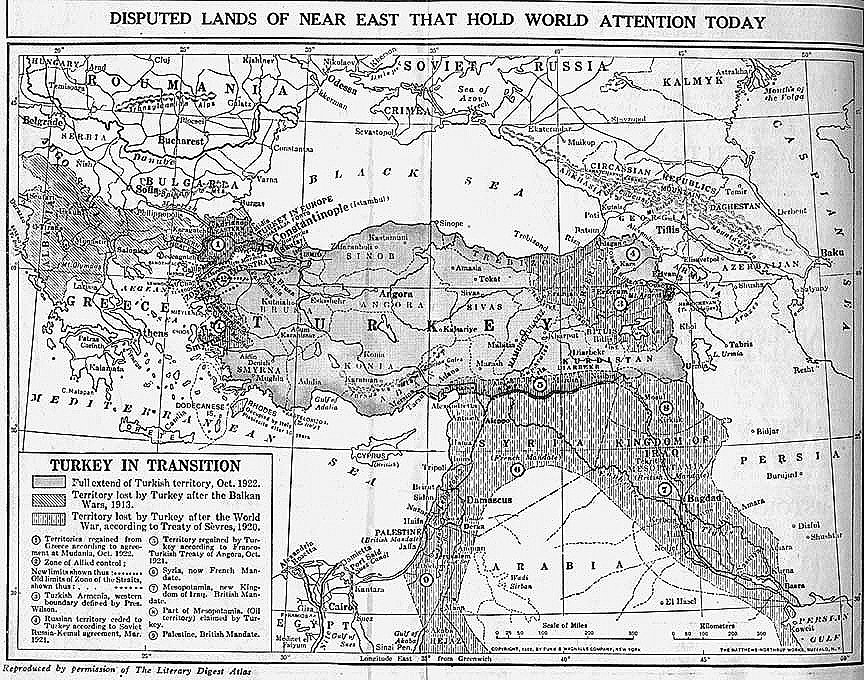
The difference is moral, not just political. His โ€œarchitecture of peaceโ€ is built on the ruins of accountability, where war criminals are statesmen and occupied peoples are told to be grateful for reconstruction. If he wants real historical perspective on the will of the people, all he has to do is find the American King-Crane commission report of 1922 and dust it off and read it. History will not remember this as the dawn of renewal, but as the latest chapter in the long struggle between imposed order and authentic freedom โ€” a struggle the peoples of Gaza, Syria, and Lebanon have not yet surrendered, and never will.

Answers of Wissam Charafeddine, MI Delegate, Candidate to the Steering Committee of Green Party

Answers of Wissam Charafeddine, MI Delegate, Candidate to the Steering Committee. (Thank you Shannel for putting the forum and questions together!)

1. ย  ย  ย If elected, how do you intend for the Steering Committee to engage better with Caucuses and caucus members to ensure those who represent oppressed communities are recognized by the GPUS?

Since the bylaws give the Steering Committee the responsibility to coordinate with committees and caucuses (Article IV, Section 4-2.7f), then it is the duty of the Steering Committee to institutionalize periodic (perhaps monthly) caucus briefingsโ€”short, focused check-ins with at least one SC liaison per caucus to track needs, priorities, and collaboration opportunities. I also support creating a Caucus Relations Working Group to enhance collaboration among caucuses and streamline communication and ensure oppressed communities are not just recognizedโ€”but integrated into platform revision, candidate recruitment, and messaging. ย 


2.      If elected, what actions or policies would you implement to ensure all Greens, regardless of disability, work and family obligations, or economic circumstances, have equitable access to participate in Green Party activities and decision-making processes?

Accessibility is a core Green value, and the bylaws expect the SC to facilitate internal participation. I will propose three actions or the enhancement of them:

1. Implement  multilingual participation tools for proposals and debates  and emphasize the asynchronous tools that we have.
2. Offer automatic hardship-based fee waivers for national meetings and create a solidarity travel fund.
3. Push for a “Green Flex” policy within committeesโ€”rotating meeting times and offering recorded summaries to accommodate working-class, disabled, and caregiving Greens.


3. ย  ย  ย What is your position on cross-ideological coalitions and partnerships? Are there any types of groups that the party should prioritize collaborating with? Are there any types of groups that the party should avoid working with?


Iย support principled coalitions rooted in shared actions, not diluted platforms. We should prioritize collaborating with:

Anti-imperialist and climate justice groups

Youth-led direct action networks

Global Greens and anti-austerity movements

We must avoid working with groups that promote genocide, racism, authoritarianism, or eco-fascism. Any coalition must be values-aligned and transparently debated by the NC.


4.       “The Green Congressional Campaign Committee (GCCC) engaged in fundraising behavior that resulted in violations of donorsโ€™ rights. GPUS Fiscal Policy requires that donors be notified and given the choice to have their contributions returned. The current SteeringCommittee has been asked to remediate impacted donors and has been provided with multiple ways to do so. At this time, they have chosen not to pursue any of these options, arguing that because the GCCC is a legally separate entity for FEC filing purposes, it is not subject to GPUS Fiscal Policy, including the Donors Bill of Rights.

This position directly contradicts the Fiscal Policyโ€™s stated purview, which covers all GPUS committees, including those registered as independent political committees.

If elected as Steering Committee co-chair, what specific actions would you pursue to correct past violations of the GPUS Donors Bill of Rights and to ensure that all GPUS committees engaged in fundraising, including those with separate legal statuses, remain compliant with GPUS Fiscal Policy and established ethical fundraising standards?”

Fiscal Policy (as referenced in Article IV) clearly applies to all GPUS committees. A minimalist, ethical Steering Committee should:

Immediately  propose to issue donor notices offering refunds, in accordance with the Donors Bill of Rights.

Establish a Fiscal Compliance Review Task Force to audit all active fundraising efforts.

Propose an amendment reaffirming that no legal structure exempts any GPUS body from ethical standards.

Transparency builds trustโ€”and we must restore it.


5.      Understanding that as a member of the steering committee of the National Committee of the Green Party you will not be able to enact governmental policies or legislation,

What is your game plan to deal with a militarized immigration system? How do we protect Hispanic, Caribbean, and other affected communities?We need to play a part of raising awareness. I will:

Support nationwide Green-led sanctuary campaigns and platform visibility for immigrant rights groups.

Collaborate with Caucuses that represent targeted communities to craft anti-militarization talking points.

Push GPUS to become a moral voice on immigration, particularly in exposing the links between climate collapse, war, and forced migration.


6.      What past or present LGBTQIA+ related events, activities, or organizations have you participated in?


  As an ally and organizer, Iโ€™ve co-hosted inclusive open mic nights, supported queer Muslim visibility through community safe spaces, and  I am working on a book in Arabic  highlighting the plurality of sexual and gender identities in Arab and Muslim communities and the misinformation associated with homophobia. I also engage in educational programming that challenges both Western stereotyping and internalized homophobia.  


7. ย  ย  ย What do you think are the biggest issues facing LGBTQIA+ People of color? What do you think are the biggest issues facing LGBTQIA+ people with disabilities?ย 

For LGBTQIA+ People of Color: systemic invisibility, violence, and the lack of culturally competent support networks.
For LGBTQIA+ people with disabilities: compounded marginalization, healthcare discrimination, and exclusion from both queer and disability movements.
The Green Party must address these through platform reform, disabled and queer caucus elevation, and intersectional candidate recruitme
nt. ย 


8.      Would you be in favor of the GPUS hiring a political director?

  Yesโ€”with clarity. A political director, if rooted in democratic values, can help streamline our national messaging, engage strategically with movements, and ensure consistency. But this role must be transparent, accountable to the SC, and subject to NC review to avoid centralization of power.  There is a difference between a Political Director and a Spokesperson. I think Spokesperson should always rotate as not to personify the Party.


9.      What are your thoughts on national visibility in the halls of Congress on off election years where Greens are lobbying for public funding of elections and other causes?


  Absolutely. We need a Green Lobby Week annuallyโ€”where Greens flood congressional offices with demands for public financing, ballot access reform, and climate legislation. Off-year action shows we are a political forceโ€”not just a ballot label. We must be visible, organized, and unafraid.  When I used to be a member of Amnesty International, I used to be on a delegation that visited the congressional offices in Detroit on a monthly basis.  We need to implement something similar.  


10.  What are your top 2-3 priorities for the operation of the Green Party of the US?

1. Triple Membership & Contributions through local engagement, tech automation, and targeted youth campaigns.
2. Form a task force to study the European Green digital platforms, and write a proposal for upgrading the GPUS digital platforms accordingly.
3. Platform Reform to build the most youth-connected, anti-colonial, climate-centered platform in U.S. politics.


Capitalism Reimagined for Human Rights and Community Benefit.

โ€œIโ€™m not a socialist in the sense of rejecting private ownership. Iโ€™m a social entrepreneur: I use capitalismโ€™s tools โ€” innovation, investment, private enterprise โ€” to serve communities and advance human rights rather than private profit. My values align with democratic and eco-socialist ideals of justice and sustainability, but I stay pragmatic, building people-driven, independent, and sustainable structures through non-violent capitalist methods.โ€

I believe that private ownership, markets, and innovation are powerful tools โ€” not inherently evil. Theyโ€™ve lifted many out of poverty, generated wondrous technologies, and accelerated human potential. But left unchecked, they often produce inequity, environmental damage, and injustice. So reimagined capitalism means:

  • Using markets & private enterprise not just for profit, but intentionally for human rights, social equity, community wellbeing, and environmental sustainability.
  • Structuring capitalism so that the externalities (pollution, displacement, exploitation, etc.) are minimized, internalized, or prevented.
  • Ensuring that communities have power: governance, ownership, voice. Not just as consumers, but as stakeholders.
  • Embedding accountability: companies, investors, governments must be answerable for social & human outcomes, not purely financial ones.
  • Hybrid models: combining public, private, cooperative, nonprofit, social enterprise, or commons-based forms.

In practice, this looks like: fair wages, safe working conditions, environmental stewardship, supporting marginalized communities, redistributing returns in some way, aligning investment with human rights, etc.


How It Might Look: Key Features

To bring this into concrete vision, here are features I think are essential in a โ€œcapitalism reimaginedโ€:

FeatureWhat It Means in Practice
Democratized ownership & controlWorker cooperatives; shared ownership; community land trusts; governance that includes those affected.
Purpose over profit (or profit + purpose)Business models where profit is a tool, not the end; reinvestment of surpluses into community; mission-driven impact.
Regulatory frameworks & institutionsLaws/policies that enforce labor rights, protect the environment, support public goods like health, education; tax regimes that distribute wealth more fairly.
Social entrepreneurship and impact investingInvestors who care about both returns and social outcomes; enterprises that solve social problems while being financially sustainable.
Commons, cooperation, solidarityCommunity-led initiatives; shared infrastructure; local decision-making; the idea that not everything should be commodified.
Transparency, accountability & measurementMetrics beyond GDP: human development, inequality, ecological impact. Workersโ€™ rights, diversity, social inclusion.

Case Studies: Where Things Are Shaping Up

These are real-world examples (warts and all) of pieces of reimagined capitalism already happening. They show itโ€™s possible โ€” though always a mix of progress + struggle.

1. China โ€” Leping Group

The Leping Group is social enterprise in China that works in eco-agriculture, microfinance, early childhood education, and domestic service training. IADB Publications
Whatโ€™s promising: it blends market operations (services people pay for) with social goals (serving underserved populations). Thereโ€™s innovation, scale, local embedding. But barriers exist in regulation, bureaucracy, and balancing profitability vs mission. IADB Publications

2. Africa โ€” Social Enterprises Creating Jobs

A study of several social enterprises across African countries (Rwanda, Ghana, Kenya, Ethiopia) shows that these ventures are creating employment, especially in neglected sectors. Examples: WASH (water, sanitation, hygiene) businesses; waste-management (โ€œTakaTaka Solutionsโ€ in Kenya) which turns trash into jobs; ambulance services where public provision is weak. Siemens Stiftung
These show how private initiative + local innovation + community need combine.

3. South Africa โ€” Social Enterprise Sector

Thereโ€™s a โ€œvibrant sectorโ€ of social enterprises in South Africa (surveyed in 2018) doing diverse work: delivering services, reducing inequality, reinvesting surpluses into social mission. Gibs Website Storage
Challenges include: legal framework (many are not formalized), accessing capital, balancing mission vs financial viability. But itโ€™s a live example of capitalism bent toward community benefit.

4. Bangladesh โ€” Friendship NGO (Runa Khan)

Friendship works in remote, climate-affected communities: combining health, education, disaster management, economic development, cultural preservation. Wikipedia
Whatโ€™s impressive is the integrated approach: instead of just one silo (say, health), they combine multiple spheres (climate + livelihoods + migration + culture), recognizing that human rights are interlinked. They serve millions, often where state capacity is hard to reach.

5. India โ€” eSamudaay (Rural Towns, Digital Commons)

Recently, eSamudaay in small towns in India is building digital-ecosystems for local entrepreneurs: enabling vegetable vendors, pharmacies, general stores, etc., to join platforms that respect data sovereignty and local governance. It uses open-source tools, a โ€œbusiness in a boxโ€ model. The idea isnโ€™t building a gigantic corporate platform that captures all value, but keeping value / decision-making local. Financial Times


Whatโ€™s Hard About It (Because Reality Bites)

  • Trade-offs: financial return vs mission. Many social enterprises struggle financially if forced to be fully self-sustaining while also paying fair wages, caring for environment etc.
  • Regulatory / legal obstacles: Many countries donโ€™t have law that supports social enterprise, or tax treatment, or simplified regulations.
  • Access to capital: Mission-oriented businesses are often seen as higher risk; fewer investors willing to trade off profit for impact.
  • Scaling without losing mission: When expanding, pressures (market, investor, competition) push mission creep.
  • Measuring outcomes: Hard to quantify human rights, social inclusion, environmental impact in ways that investors, public and stakeholders accept.
  • Global externalities & power imbalances: Multinational corporations, global supply chains can undermine local well-being (e.g. extractive industries, environmental damage), even when domestic policies are good.

How I See It Looking If It Were More Fully Realized

If we built more of our economic systems in this reimagined way, we might see:

  • Cooperative zones: Worker-owned businesses and community-governed enterprises making up a significant portion of local economies.
  • Mandatory social and environmental audits: Not just financial audits. Companies measure their human rights impact, environmental footprints, equity & inclusion.
  • Impact investment mainstreaming: Investors (banks, pension funds) expect social returns as part of their mandate. Instruments like green bonds, social bonds, impact bonds, community investment funds proliferate.
  • Regulated market failures fixed: Pollution, climate change, monopoly power, resource depletion are priced in (carbon taxes, regulation, strong antitrust).
  • Universal basic services: Health, education, housing, digital infrastructure are guaranteed; private enterprise complements but doesnโ€™t replace public goods.
  • Local economic resilience: Local supply chains, local ownership of infrastructure (energy, water etc.), community resources.
  • Strong safety nets & redistribution: Tax systems that ensure wealth doesnโ€™t concentrate; social protections for marginalized groups.

Why This Matters

  • Human rights are not optional; economic systems must serve people, not the other way around.
  • Environmental crises + inequality threaten the viability of economies built on destruction and exclusion.
  • Communities left out of markets or harmed by them suffer โ€” morally, socially, and ultimately economically (because instability, unrest, poor health etc. cost all of us).
  • Innovation thrives when the needs of many are considered, not just markets that serve the wealthy.

Conclusion

Reimagined capitalism doesnโ€™t reject private ownership or markets; it reorients them. It says: yes, entrepreneurship, investment, innovation have tremendous value โ€” but they should be harnessed so that private profit and community benefit, human rights, environmental sustainability are not enemies, but partners.

What this looks like in practice is messy and varied. It is already budding in places: in South Africa, India, Bangladesh, parts of China, and Africa more broadly. Scaling it up will require changes in policy, attitude, governance, and investment.

Article 4 Freedom of Religion: Defending not only the dignity of the believerโ€”but the humanity of the doubter

.FridayMusings is pleased to provide our readers with Article 4 โ€“ Freedom of Religion from theย Universal Declaration of Human Valuesย by Wissam Charafeddine, a Livonia author and lecturer. This article is particularly important with its discussion of defending the dignity of the believer–but the humanity of the doubter.Everyone has the right to freedom of thought, conscience and religion; this right includes freedom to change or disavow his religion or belief, and freedom, either alone or in community with others and in public or private, to manifest his religion or belief in teaching, practice, worship and observance.ย 


With over 4300 religions in the world, overย 32,000 Christian denominations, 10’s of thousands of Muslim and Jewish sects and schools of thought and over a trillion Hindu and Budhist Gods, the freedom to believeโ€”or not to believeโ€”is one of the most sacred rights a human being can possess.ย Article 4 of the Universal Declaration of Human Valuesย affirms that and includes the right to change or disavow oneโ€™s religion, and to practice, teach, and express beliefโ€”either alone or with others, in private or in public. These freedoms protect not just religious devotion, but the autonomy of the soul and mind.This article is rooted inย Article 18 of the Universal Declaration of Human Rights, drafted after the horrors of global religious persecution and war. It reflects centuries of philosophical struggle: from Lockeโ€™sย Letter Concerning Toleration, which argued that faith must be free of state control, to the Enlightenment thinkers who demanded reason over dogma. It also draws from the painful lessons of the Reformation, the Inquisition, and countless modern-day examples where individuals have been punishedโ€”or killedโ€”for their beliefs, conversions, or criticisms of religious authorities.


Today, religious freedom is still under siege around the world. Apostates and freethinkers are imprisoned or executed in several countries. In others, entire religious communities face systematic discriminationโ€”whether it’s Uyghur Muslims in China placed in camps, Christians attacked in India, or Baha’is denied citizenship rights in Iran. Even in so-called democracies, laws exist that blur the line between blasphemy and dissent, making it dangerous to question mainstream religious narratives. As someone who has exercised this right by publishing my Arabic-language bookย Dialogue: Universe from Voidโ€”a respectful but direct critique of classical proofs of Godโ€™s existenceโ€”I recognize that this freedom is not guaranteed everywhere. My ability to speak, write, and reflect on these matters without fear is a privilege many still do not have.


True freedom of religion includes the freedom to search, to question, to leave, or to reform.ย It includes the right to be silent, and the right to speak. Without that, belief becomes coercion, and conscience becomes property of the state or the mob. In defending this right, we defend not only the dignity of the believerโ€”but the humanity of the doubter.

Article 3 โ€“ Freedom of Expression and Assembly

Every human being has the right for freedom of expression without transgression on the rights of others. ย  Everyone has the right to freedom of peaceful assembly and association.”

From the Universal Declaration of Human Values by Wissam Charafeddine

These freedoms have deep historical roots. From Enlightenment thinkers like John Locke and Voltaire to the American and French revolutions, the right to express ideas and organize peacefully has been seen as essential to justice and social progress. After the horrors of World War II, the Universal Declaration of Human Rights (1948) formally recognized these rights as fundamental to global peace and human dignity. Thinkers like John Stuart Mill, Hannah Arendt, and Amartya Sen have all argued that expression and association are necessary for truth, civic engagement, and human development. Freedom of expression and peaceful assembly are the cornerstones of any society that seeks truth, justice, and progress. Article 3 of the Universal Declaration of Human Values declares that every individual has the right to express themselves and to gather peacefully with othersโ€”so long as this expression does not infringe on the rights of others. But in todayโ€™s world, the boundaries of this right are increasingly contested.

We are witnessing a dangerous inflation in what is considered โ€œhate speech.โ€ While true hateโ€” such as antisemitism, islamophobia, or transphobia that has incited real-world violenceโ€”is sometimes tolerated in the halls of government and media, legitimate political speechโ€”such as saying Free Palestine which is a cry for liberation, justice, and the dignity of a displaced people – is often smeared, suppressed, or even criminalized. This distortion of the term โ€œharmโ€ threatens the very foundation of democratic discourse. We must recognize that the right to speak freely must outweigh the discomfort it may cause, especially when that discomfort comes from challenging injustice, power, or the political status quo.

It is critical to distinguish between criticizing ideas and demeaning people. Ideas are not people. Critiqueโ€”even ridiculeโ€”of ideologies, philosophies, or religions must remain protected speech. What should never be tolerated, however, is the dehumanization or violation of individualsโ€™ dignity based on who they are. I was able to publish my latest Arabic book, A Discussion โ€“ Universe from Void, which critiques classical arguments for the existence of God and proposes a new alternative arguments. It is a bold exploration of a sensitive subjectโ€”one that could not be published freely in many countries around the world. My ability to write it, and your ability to read it, are freedoms we must fiercely protect. Not just for ourselvesโ€”but for future generations who must be allowed to think, question, and speak without fear.

Speech should not be censored merely because it offends or challenges dominant power structures. While we must condemn real and substantial incitement to violence, we should err on the side of freedomโ€”not fear. The moment we begin outlawing words for making others โ€œuncomfortable,โ€ we open the door to authoritarianism cloaked in the language of safety. We should not mask “suppressed speech zones” as “safe zones”. Dialogue happens to remove discomfort by communicating perspectives. History, from Voltaire to Dr. King to Edward Said, teaches us that truth is often uncomfortable. And justice often begins with a voice that refuses to be silenced.  

Introducing a Journey Through the Foundations of Universal Human Values:ย Article 1: Freedom

Written and shared with Musings readers by Livonia resident and author Wissam Charafeddine
As an Arab American activist, author, and educator dedicated to the values of human dignity, justice, and enlightenment, I have long been fascinated by the evolution of human rights across civilizations. Our modern understanding of freedom, equality, and human dignity did not arise overnight; it is the result of centuries of thought, struggle, and legal progress from various cultures, traditions, and revolutions.

A declaration is not merely a set of words on paper; when embraced by people, it becomes a powerful force that shapes societies and defines the course of history. Foundational documentsโ€”such as the Magna Carta, the Bill of Rights, and the Universal Declaration of Human Rightsโ€”have laid the groundwork for the freedoms and protections we enjoy today. Yet no state can endure in justice without being rooted in enduring values and principlesโ€”values that uphold human dignity, peace, freedom, security, and equality, rather than mere power or prosperity.

Drawing from this vast human heritage, and integrating modern concerns such as environmental protection, animal rights, and sexual freedom, I have authoredย theย Universal Declaration of Human Valuesโ€”a contemporary framework for a just and humane society. This book serves as both a guide for modern governance and a call to safeguard the progress humanity has painstakingly achieved.
In the coming months, I am delighted to accept the invitation of a Livonia champion of Human Rights, Bill Joyner, to launch a special series exploringย twenty foundational valuesย that have shaped our global quest for an ideal, just society. Each month, I will present one of these milestonesโ€”tracing its history, philosophy, and relevance for us today.
Article 1: Freedomโ€”the core principle upon which all other rights are built:
“All human beings are born free and equal in dignity and rights, private ownership, security, and pursuit of a better life.”

This simple yet profound statement distills the essence of what it means to live in a society that respects human dignity. Let us examine its components:

“All human beings are born free and equal in dignity and rights.”ย This declares that every personโ€”regardless of race, gender, origin, or beliefโ€”is inherently entitled to rights and respect. No person should be considered superior or inferior by virtue of birth.

“Private ownership.”ย The right to own and control property is a vital pillar of individual liberty, empowering people to manage their resources and make independent choices

“Security.”ย Security is the guarantee that oneโ€™s rights, body, and well-being are protectedโ€”both by law and societyโ€”against violence, oppression, and discrimination.

“Pursuit of a better life.”ย Every human being deserves the opportunity to seek personal fulfillment, improvement, and happiness, free from unjust obstacles.

The ideals expressed in this article are not newโ€”they are deeply rooted in humanityโ€™s intellectual and political evolution:

Enlightenment (17th-18th centuries):ย Philosophers like John Locke and Jean-Jacques Rousseau articulated concepts of natural rights, liberty, and the social contract, establishing the modern idea of equal human dignity and freedom.

American Revolution (1776):ย The U.S. Declaration of Independence proclaimed that “all men are created equal” with inalienable rights to “life, liberty, and the pursuit of happiness.”

French Revolution (1789):ย Theย Declaration of the Rights of Man and of the Citizenย enshrined the principles of equality, property rights, freedom of expression, and legal protections for all citizens.

Universal Declaration of Human Rights (1948):ย In response to the horrors of World War II, the global community affirmed these timeless ideals, declaring that every human is entitled to “life, liberty, and security of person.”

Modern International Law:ย Covenants such as theย International Covenant on Civil and Political Rightsย and theย International Covenant on Economic, Social and Cultural Rightsย further refine these principles on a global scale.

I invite you to join me on this journey over the next several months as we explore, one by one, the milestones that continue to guide the global conscience toward freedom, dignity, and justice for all.