Answers of Wissam Charafeddine, MI Delegate, Candidate to the Steering Committee. (Thank you Shannel for putting the forum and questions together!)
1. If elected, how do you intend for the Steering Committee to engage better with Caucuses and caucus members to ensure those who represent oppressed communities are recognized by the GPUS?
Since the bylaws give the Steering Committee the responsibility to coordinate with committees and caucuses (Article IV, Section 4-2.7f), then it is the duty of the Steering Committee to institutionalize periodic (perhaps monthly) caucus briefings—short, focused check-ins with at least one SC liaison per caucus to track needs, priorities, and collaboration opportunities. I also support creating a Caucus Relations Working Group to enhance collaboration among caucuses and streamline communication and ensure oppressed communities are not just recognized—but integrated into platform revision, candidate recruitment, and messaging.
2. If elected, what actions or policies would you implement to ensure all Greens, regardless of disability, work and family obligations, or economic circumstances, have equitable access to participate in Green Party activities and decision-making processes?
Accessibility is a core Green value, and the bylaws expect the SC to facilitate internal participation. I will propose three actions or the enhancement of them:
1. Implement multilingual participation tools for proposals and debates and emphasize the asynchronous tools that we have.
2. Offer automatic hardship-based fee waivers for national meetings and create a solidarity travel fund.
3. Push for a “Green Flex” policy within committees—rotating meeting times and offering recorded summaries to accommodate working-class, disabled, and caregiving Greens.
3. What is your position on cross-ideological coalitions and partnerships? Are there any types of groups that the party should prioritize collaborating with? Are there any types of groups that the party should avoid working with?
I support principled coalitions rooted in shared actions, not diluted platforms. We should prioritize collaborating with:
Anti-imperialist and climate justice groups
Youth-led direct action networks
Global Greens and anti-austerity movements
We must avoid working with groups that promote genocide, racism, authoritarianism, or eco-fascism. Any coalition must be values-aligned and transparently debated by the NC.
4. “The Green Congressional Campaign Committee (GCCC) engaged in fundraising behavior that resulted in violations of donors’ rights. GPUS Fiscal Policy requires that donors be notified and given the choice to have their contributions returned. The current SteeringCommittee has been asked to remediate impacted donors and has been provided with multiple ways to do so. At this time, they have chosen not to pursue any of these options, arguing that because the GCCC is a legally separate entity for FEC filing purposes, it is not subject to GPUS Fiscal Policy, including the Donors Bill of Rights.
This position directly contradicts the Fiscal Policy’s stated purview, which covers all GPUS committees, including those registered as independent political committees.
If elected as Steering Committee co-chair, what specific actions would you pursue to correct past violations of the GPUS Donors Bill of Rights and to ensure that all GPUS committees engaged in fundraising, including those with separate legal statuses, remain compliant with GPUS Fiscal Policy and established ethical fundraising standards?”
Fiscal Policy (as referenced in Article IV) clearly applies to all GPUS committees. A minimalist, ethical Steering Committee should:
Immediately propose to issue donor notices offering refunds, in accordance with the Donors Bill of Rights.
Establish a Fiscal Compliance Review Task Force to audit all active fundraising efforts.
Propose an amendment reaffirming that no legal structure exempts any GPUS body from ethical standards.
Transparency builds trust—and we must restore it.
5. Understanding that as a member of the steering committee of the National Committee of the Green Party you will not be able to enact governmental policies or legislation,
What is your game plan to deal with a militarized immigration system? How do we protect Hispanic, Caribbean, and other affected communities?We need to play a part of raising awareness. I will:
Support nationwide Green-led sanctuary campaigns and platform visibility for immigrant rights groups.
Collaborate with Caucuses that represent targeted communities to craft anti-militarization talking points.
Push GPUS to become a moral voice on immigration, particularly in exposing the links between climate collapse, war, and forced migration.
6. What past or present LGBTQIA+ related events, activities, or organizations have you participated in?
As an ally and organizer, I’ve co-hosted inclusive open mic nights, supported queer Muslim visibility through community safe spaces, and I am working on a book in Arabic highlighting the plurality of sexual and gender identities in Arab and Muslim communities and the misinformation associated with homophobia. I also engage in educational programming that challenges both Western stereotyping and internalized homophobia.
7. What do you think are the biggest issues facing LGBTQIA+ People of color? What do you think are the biggest issues facing LGBTQIA+ people with disabilities?
For LGBTQIA+ People of Color: systemic invisibility, violence, and the lack of culturally competent support networks.
For LGBTQIA+ people with disabilities: compounded marginalization, healthcare discrimination, and exclusion from both queer and disability movements.
The Green Party must address these through platform reform, disabled and queer caucus elevation, and intersectional candidate recruitment.
8. Would you be in favor of the GPUS hiring a political director?
Yes—with clarity. A political director, if rooted in democratic values, can help streamline our national messaging, engage strategically with movements, and ensure consistency. But this role must be transparent, accountable to the SC, and subject to NC review to avoid centralization of power. There is a difference between a Political Director and a Spokesperson. I think Spokesperson should always rotate as not to personify the Party.
9. What are your thoughts on national visibility in the halls of Congress on off election years where Greens are lobbying for public funding of elections and other causes?
Absolutely. We need a Green Lobby Week annually—where Greens flood congressional offices with demands for public financing, ballot access reform, and climate legislation. Off-year action shows we are a political force—not just a ballot label. We must be visible, organized, and unafraid. When I used to be a member of Amnesty International, I used to be on a delegation that visited the congressional offices in Detroit on a monthly basis. We need to implement something similar.
10. What are your top 2-3 priorities for the operation of the Green Party of the US?
1. Triple Membership & Contributions through local engagement, tech automation, and targeted youth campaigns.
2. Form a task force to study the European Green digital platforms, and write a proposal for upgrading the GPUS digital platforms accordingly.
3. Platform Reform to build the most youth-connected, anti-colonial, climate-centered platform in U.S. politics.

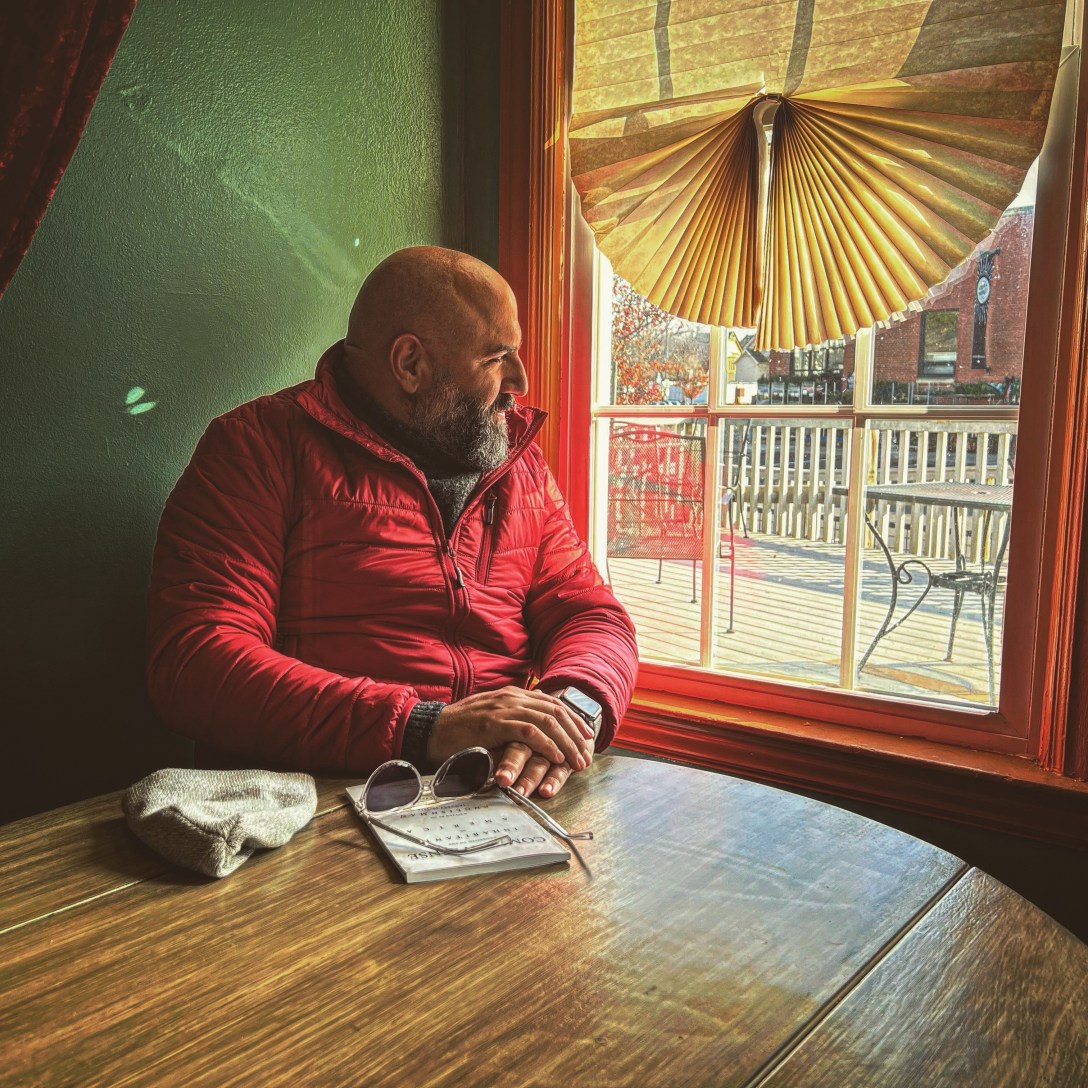
 Wissam Charafeddine