
Blog
Article 5: Sexual Freedom

Article 5: Sexual Freedom – Everyone has the right of freedom of choice and expression in their sexual orientation, and the only limitation of law should be related to securing the consent of adults within the sexual relationship and preventing rationally considerable harm related to it to citizens and to society.
Article 5 is simple: the state should be a referee, not a roommate. Adults who give informed, voluntary consent—and who aren’t harming anyone—should be left alone by the law. That’s not culture-war fireworks; that’s limited government with a backbone. If we defend freedom of worship, speech, and association from state micromanagement, we should be consistent and defend private, adult relationships that clear the same bar.
Consent here isn’t a shrug; it’s architecture. Adults only. Informed, voluntary, and capable—no coercion, no grooming, no fraud, no power-play that makes “yes” meaningless. The other guardrail is preventing real, demonstrable harm: assault, exploitation, trafficking, blackmail, non-consensual images. Draw those lines bright, enforce them hard, and we protect what matters: the vulnerable, the integrity of commitments, and the peace of our homes.
This approach strengthens families and preserves religious freedom. Churches, synagogues, and mosques remain free to teach and bless—or not—according to conscience. The civil law stays humble: punish force and fraud, respect private adult choices. That’s moral federalism, not moral relativism—one civil standard for everyone, and many voluntary moral codes within our communities.
Scientific research has played a role in challenging earlier views that considered non-heteronormative orientations as pathological. Advances in psychology and understanding of sexual orientation have contributed to recognizing it as a natural and diverse aspect of human identity. Professional organizations such as the American Psychological Association and the World Health Organization have depathologized homosexuality and emphasized the importance of respecting sexual orientation as a fundamental aspect of an individual’s identity.
Treating homosexuality like a contagion misunderstands both science and kids. Decades of research in psychology and pediatrics show that sexual orientation isn’t learned by exposure any more than left-handedness is picked up by sitting next to a southpaw; it’s a stable trait shaped by a mix of biology and development, not by classroom mentions or a neighbor’s marriage. What children do absorb from adults is whether the world is safe, honest, and fair. A conservative society that prizes family strength and personal virtue should focus on shielding kids from real harms—coercion, exploitation, bullying—not from the existence of people who are simply different. Teaching respect doesn’t “turn” anyone; it teaches our sons and daughters how to be decent.
If we can agree that adults must be free, children must be safe, and predators must be stopped, then we already agree on the heart of Article 5. The rest belongs to families, faiths, and the quiet dignity of conscience—a Michigan kind of common sense that guards liberty without losing sight of responsibility.
Ristorante il Cantuccio Nerano – October 6, 2025

Villaggio di Casa, Massa Lubrense, Napoli, Italy – October 9, 2025

Golden Hour
Preparing your move: visa, wealth management, money transfer, real estate

This video, “Preparing your move: visa, wealth management, money transfer, real estate,” offers a comprehensive overview of the essential steps and considerations for Americans planning a move to France. The key takeaways across the four topics are summarized below.
The full discussion on these topics begins with the visa process around [05:28].
1. France Visa and Relocation
Alison Grunt Lunes, a visas and relocation expert, emphasizes that securing the right visa is the critical first step:
- Long-Term Strategy: Your visa choice must align with your long-term goals (e.g., eligibility for a 10-year residence card or naturalization) [07:08].
- No Digital Nomad Visa: France has no dedicated digital nomad visa. You cannot legally work remotely for a foreign employer without a visa that enables you to work and requires a proper setup for paying French taxes and social charges [07:48]. Renewals are subject to increased scrutiny by the Prefecture to ensure your income aligns with your visa type [07:43].
- Tax Residence: Residing in France full-time means you must establish tax residence there, as opposed to attempting to be a tax resident elsewhere [08:45].
- Key Visa Types:
- Visitor Visas: For those who do not intend to work. A renewable visitor visa establishes tax residence from the day you arrive [11:02]. A temporary visa (up to 12 months) is not renewable or extendable in France [11:08].
- Self-Employment/Business Visas: Options exist for those who want to be self-employed (e.g., Micro-Entrepreneur), but they often have income caps and require demonstrating potential clients in France [13:00].
- Health Coverage: For a visitor visa, you must show proof of a private health insurance policy for the first year [01:12:26]. If you are working, registering your business or employment immediately begins the process of getting you into the French healthcare system [01:13:56].
2. Wealth Management and Tax Planning
Alex Ingrim, a financial and cross-border planning expert, covers the complexities of being a dual US and French taxpayer:
- Dual Residency: As a US citizen, you are liable for US taxes on worldwide income (citizenship-based). In France, you will become a tax resident (residency-based) [02:24].
- Favorable Tax Treaty: The US-France double taxation agreement is highly advantageous for US citizens [02:40]:
- Retirement: Income from US retirement accounts (401k, IRA, Social Security, US defined benefit pensions) is taxed only by the US, and you receive a corresponding French tax credit to avoid double taxation [02:49].
- Investments: US-domiciled investments (like US ETFs, mutual funds, and stocks) can also benefit from the treaty, often resulting in capital gains being taxed at lower US rates [02:53].
- Critical Complications:
- Estate Taxes: French estate taxes are significantly higher and apply at much lower exemption thresholds than in the US [02:54]. You must consult a specialized French estate planning lawyer.
- Trusts: Trusts are generally recognized as transparent in France and require extensive reporting, making trust-based planning difficult [02:58].
- Financial Products: Local French tax-mitigation strategies (like the Assurance Vie) are often not US tax-efficient [02:54]. You must ensure any advice works for both US and French tax systems.
3. International Money Transfer
Ellen Fond, a money transfer expert, discusses how to handle the financial logistics:
- Exchange Rate Risk: Fluctuations between the US Dollar and the Euro can significantly impact large purchases like property (e.g., a currency shift could result in an 18% difference in purchasing power) [03:40].
- Securing Rates: You can use a money transfer service to lock in an exchange rate for future transfers using forward contracts, which is useful when you have a closing date set for a property purchase [04:11].
- Bank Services: These services can save you 3-4% compared to using standard American banks for overseas transfers [03:50]. They can also help US citizens secure an appointment to open a local French bank account, a process that can be difficult otherwise [04:16].
4. Real Estate and Property
Tom Isdown, an architecture and planning consultant, explains the process of buying and developing property:
- Purchase Timeline: The standard process (search, offer, signing contracts) takes at least three months, but the reality is often between three and six months [05:58].
- The Compromis de Vente: This initial contract is a crucial document. You have a 10-day cooling-off period after signing to withdraw without penalty [05:32]. You can (and should) insert conditional clauses (e.g., contingent upon securing financing or receiving planning approval for renovation) to protect your deposit if the property doesn’t meet your needs [05:08].
- Notaire’s Role: The Notaire is a state official who ensures the sale is legal, but they are neutral [05:27]. They do not act as your individual advocate or attorney to advise on due diligence, property condition, or the insertion of protective clauses [05:12].
- Due Diligence is the Buyer’s Responsibility: Unlike in the US, property inspections or structural surveys are not standard [05:51]. You should hire professionals (architects, surveyors) to check for structural integrity, hidden costs, and urban planning hurdles (e.g., confirming a barn can legally be converted) before signing the final deed [05:57].
- Costs: Expect to pay agency fees (typically 6-8%) and Notaire fees (which cover stamp duty tax and the Notaire‘s services), totaling about 7-8% of the purchase price [05:43].
Contact Information
For more information, you can find the experts’ resources using the following links and details:
- Alison Grunt Lunes / Your Transformation: Author of Foolproof French Visas and offers consultations and free Q&A sessions.
- Alex Ingrim / Liberty Atlantic: Provides cross-border financial and tax planning advice.
- Ellen Fond / Currency Direct: Offers consultations for money transfer planning.
- Tom Isdown / French Plans: Offers architecture and planning consultancy for property projects.
You can watch the full video here: Preparing your move: visa, wealth management, money transfer, real estate
Preparing your move: visa, wealth management, money transfer, real estate

Answers of Wissam Charafeddine, MI Delegate, Candidate to the Steering Committee of Green Party
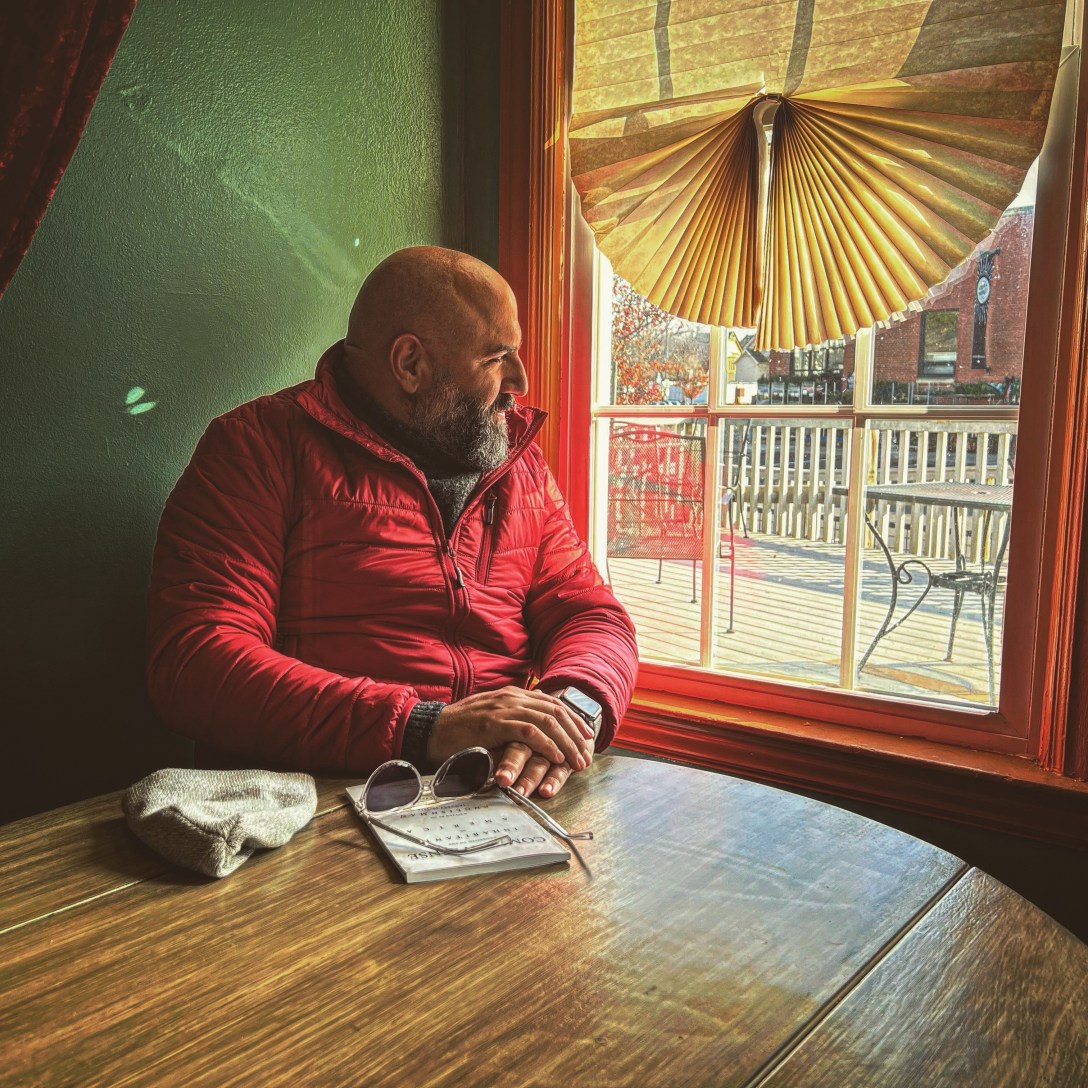
Answers of Wissam Charafeddine, MI Delegate, Candidate to the Steering Committee. (Thank you Shannel for putting the forum and questions together!)
1. If elected, how do you intend for the Steering Committee to engage better with Caucuses and caucus members to ensure those who represent oppressed communities are recognized by the GPUS?
Since the bylaws give the Steering Committee the responsibility to coordinate with committees and caucuses (Article IV, Section 4-2.7f), then it is the duty of the Steering Committee to institutionalize periodic (perhaps monthly) caucus briefings—short, focused check-ins with at least one SC liaison per caucus to track needs, priorities, and collaboration opportunities. I also support creating a Caucus Relations Working Group to enhance collaboration among caucuses and streamline communication and ensure oppressed communities are not just recognized—but integrated into platform revision, candidate recruitment, and messaging.
2. If elected, what actions or policies would you implement to ensure all Greens, regardless of disability, work and family obligations, or economic circumstances, have equitable access to participate in Green Party activities and decision-making processes?
Accessibility is a core Green value, and the bylaws expect the SC to facilitate internal participation. I will propose three actions or the enhancement of them:
1. Implement multilingual participation tools for proposals and debates and emphasize the asynchronous tools that we have.
2. Offer automatic hardship-based fee waivers for national meetings and create a solidarity travel fund.
3. Push for a “Green Flex” policy within committees—rotating meeting times and offering recorded summaries to accommodate working-class, disabled, and caregiving Greens.
3. What is your position on cross-ideological coalitions and partnerships? Are there any types of groups that the party should prioritize collaborating with? Are there any types of groups that the party should avoid working with?
I support principled coalitions rooted in shared actions, not diluted platforms. We should prioritize collaborating with:
Anti-imperialist and climate justice groups
Youth-led direct action networks
Global Greens and anti-austerity movements
We must avoid working with groups that promote genocide, racism, authoritarianism, or eco-fascism. Any coalition must be values-aligned and transparently debated by the NC.
4. “The Green Congressional Campaign Committee (GCCC) engaged in fundraising behavior that resulted in violations of donors’ rights. GPUS Fiscal Policy requires that donors be notified and given the choice to have their contributions returned. The current SteeringCommittee has been asked to remediate impacted donors and has been provided with multiple ways to do so. At this time, they have chosen not to pursue any of these options, arguing that because the GCCC is a legally separate entity for FEC filing purposes, it is not subject to GPUS Fiscal Policy, including the Donors Bill of Rights.
This position directly contradicts the Fiscal Policy’s stated purview, which covers all GPUS committees, including those registered as independent political committees.
If elected as Steering Committee co-chair, what specific actions would you pursue to correct past violations of the GPUS Donors Bill of Rights and to ensure that all GPUS committees engaged in fundraising, including those with separate legal statuses, remain compliant with GPUS Fiscal Policy and established ethical fundraising standards?”
Fiscal Policy (as referenced in Article IV) clearly applies to all GPUS committees. A minimalist, ethical Steering Committee should:
Immediately propose to issue donor notices offering refunds, in accordance with the Donors Bill of Rights.
Establish a Fiscal Compliance Review Task Force to audit all active fundraising efforts.
Propose an amendment reaffirming that no legal structure exempts any GPUS body from ethical standards.
Transparency builds trust—and we must restore it.
5. Understanding that as a member of the steering committee of the National Committee of the Green Party you will not be able to enact governmental policies or legislation,
What is your game plan to deal with a militarized immigration system? How do we protect Hispanic, Caribbean, and other affected communities?We need to play a part of raising awareness. I will:
Support nationwide Green-led sanctuary campaigns and platform visibility for immigrant rights groups.
Collaborate with Caucuses that represent targeted communities to craft anti-militarization talking points.
Push GPUS to become a moral voice on immigration, particularly in exposing the links between climate collapse, war, and forced migration.
6. What past or present LGBTQIA+ related events, activities, or organizations have you participated in?
As an ally and organizer, I’ve co-hosted inclusive open mic nights, supported queer Muslim visibility through community safe spaces, and I am working on a book in Arabic highlighting the plurality of sexual and gender identities in Arab and Muslim communities and the misinformation associated with homophobia. I also engage in educational programming that challenges both Western stereotyping and internalized homophobia.
7. What do you think are the biggest issues facing LGBTQIA+ People of color? What do you think are the biggest issues facing LGBTQIA+ people with disabilities?
For LGBTQIA+ People of Color: systemic invisibility, violence, and the lack of culturally competent support networks.
For LGBTQIA+ people with disabilities: compounded marginalization, healthcare discrimination, and exclusion from both queer and disability movements.
The Green Party must address these through platform reform, disabled and queer caucus elevation, and intersectional candidate recruitment.
8. Would you be in favor of the GPUS hiring a political director?
Yes—with clarity. A political director, if rooted in democratic values, can help streamline our national messaging, engage strategically with movements, and ensure consistency. But this role must be transparent, accountable to the SC, and subject to NC review to avoid centralization of power. There is a difference between a Political Director and a Spokesperson. I think Spokesperson should always rotate as not to personify the Party.
9. What are your thoughts on national visibility in the halls of Congress on off election years where Greens are lobbying for public funding of elections and other causes?
Absolutely. We need a Green Lobby Week annually—where Greens flood congressional offices with demands for public financing, ballot access reform, and climate legislation. Off-year action shows we are a political force—not just a ballot label. We must be visible, organized, and unafraid. When I used to be a member of Amnesty International, I used to be on a delegation that visited the congressional offices in Detroit on a monthly basis. We need to implement something similar.
10. What are your top 2-3 priorities for the operation of the Green Party of the US?
1. Triple Membership & Contributions through local engagement, tech automation, and targeted youth campaigns.
2. Form a task force to study the European Green digital platforms, and write a proposal for upgrading the GPUS digital platforms accordingly.
3. Platform Reform to build the most youth-connected, anti-colonial, climate-centered platform in U.S. politics.
 Wissam Charafeddine