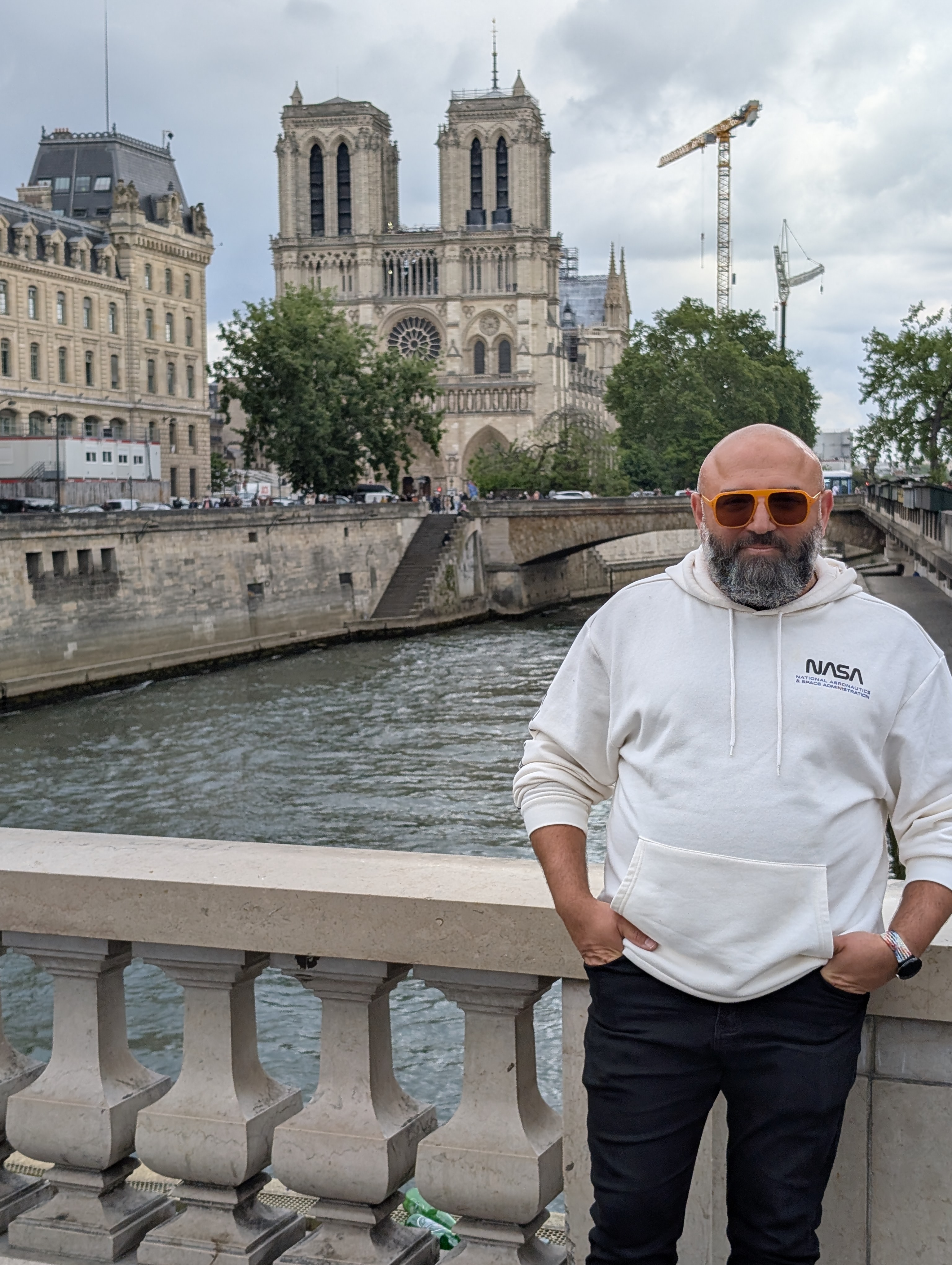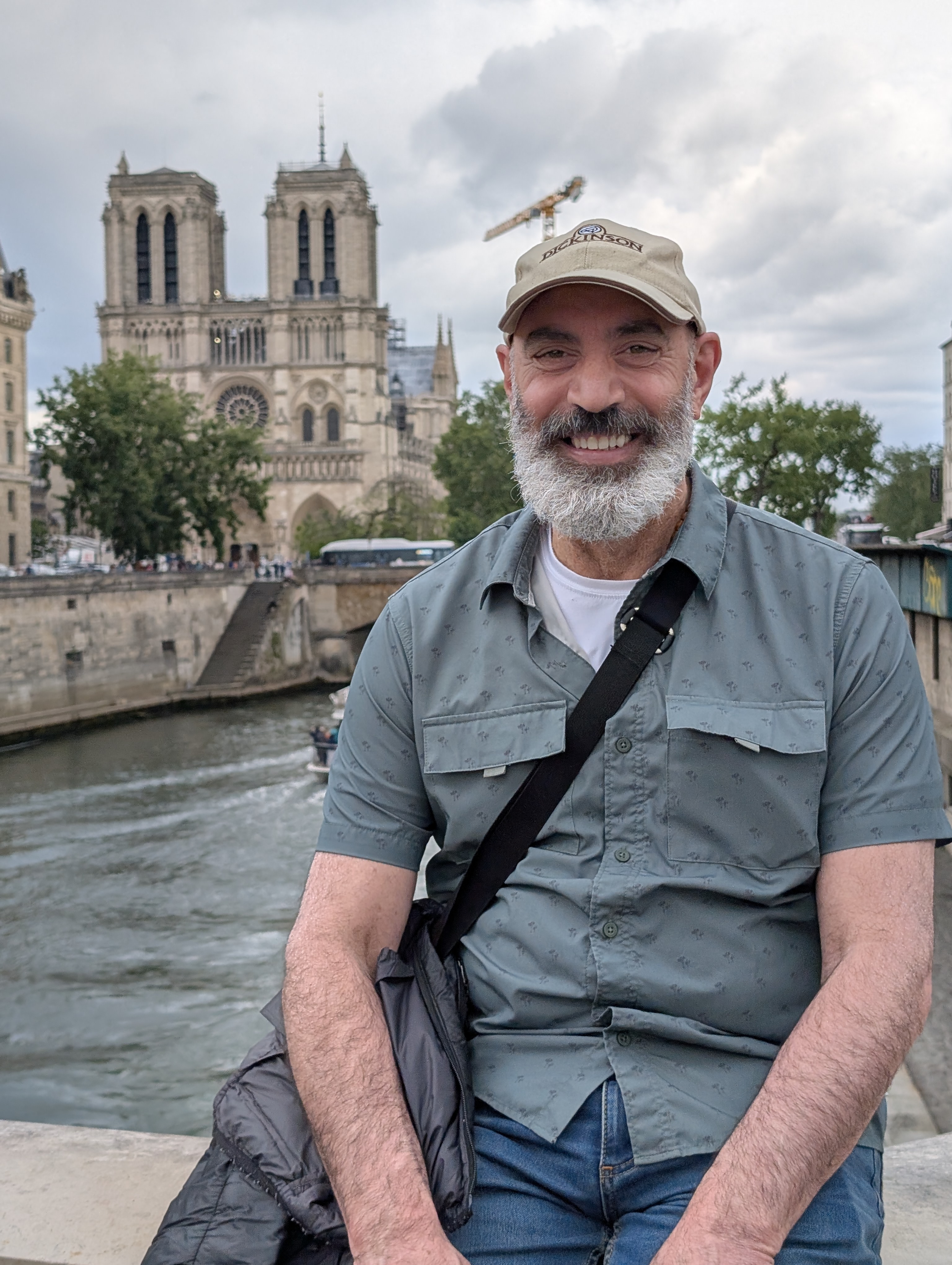
Paris Again 4: Tuesday, May 13, 2025 – Champs-Elysees

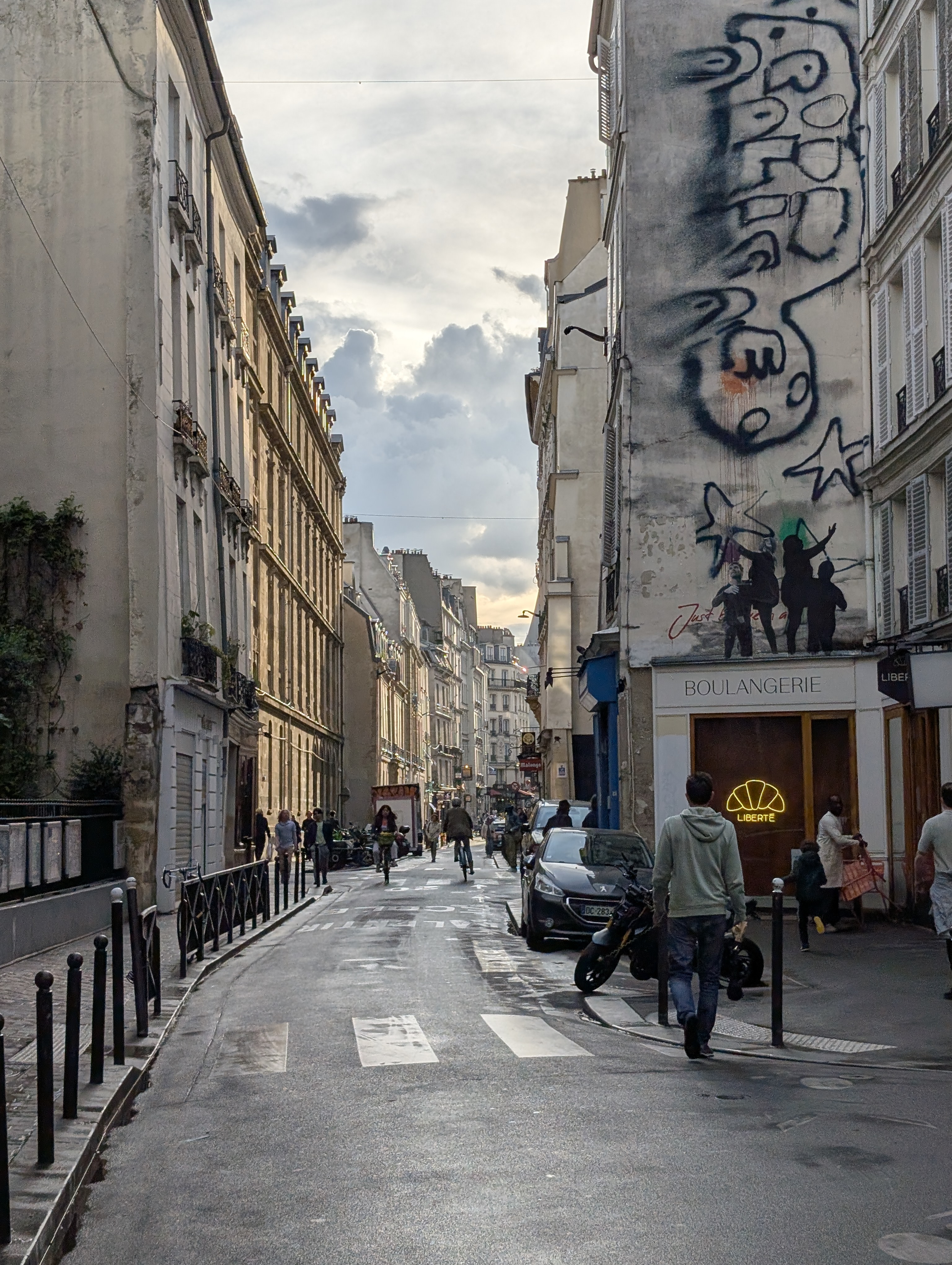
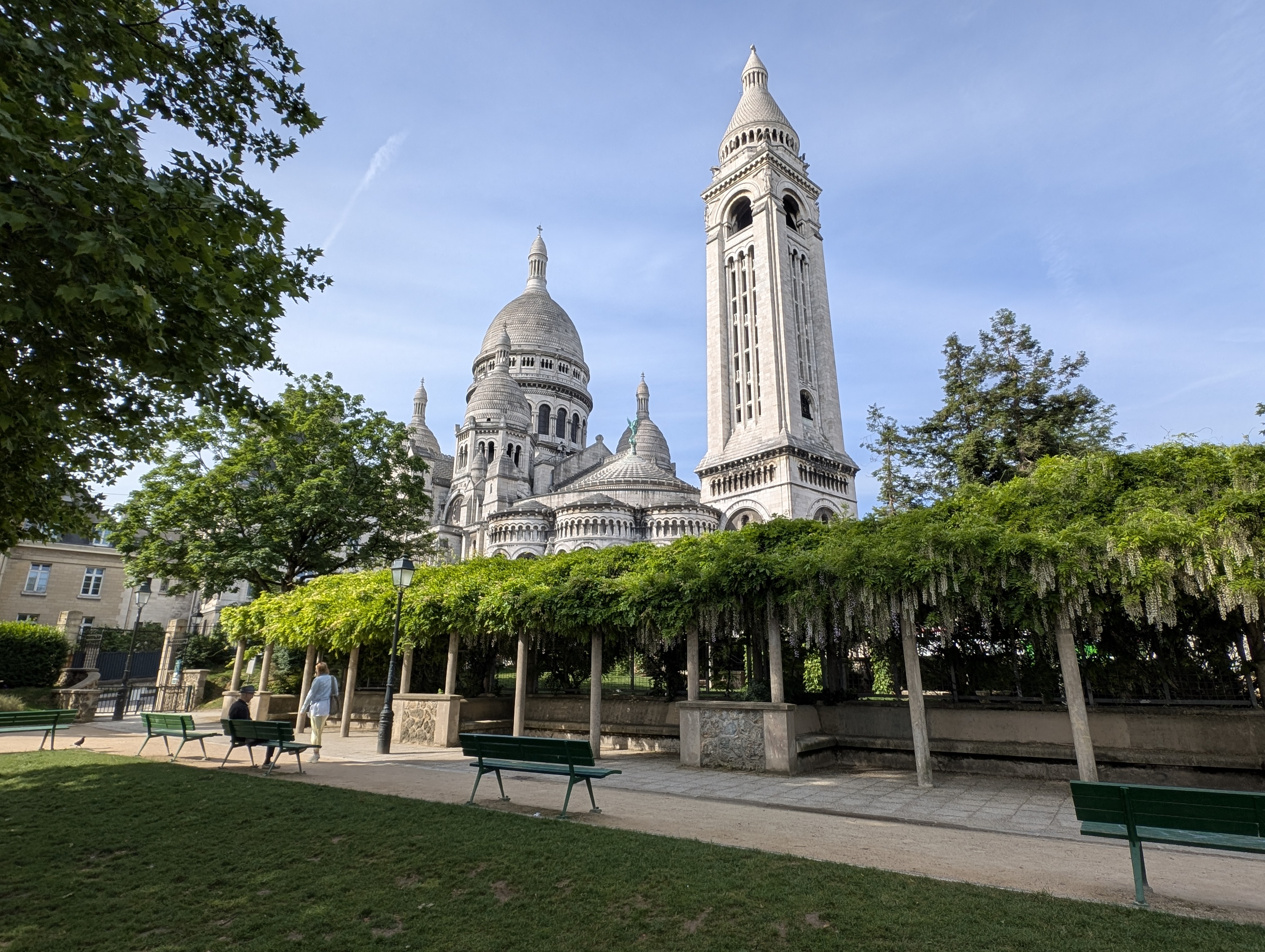
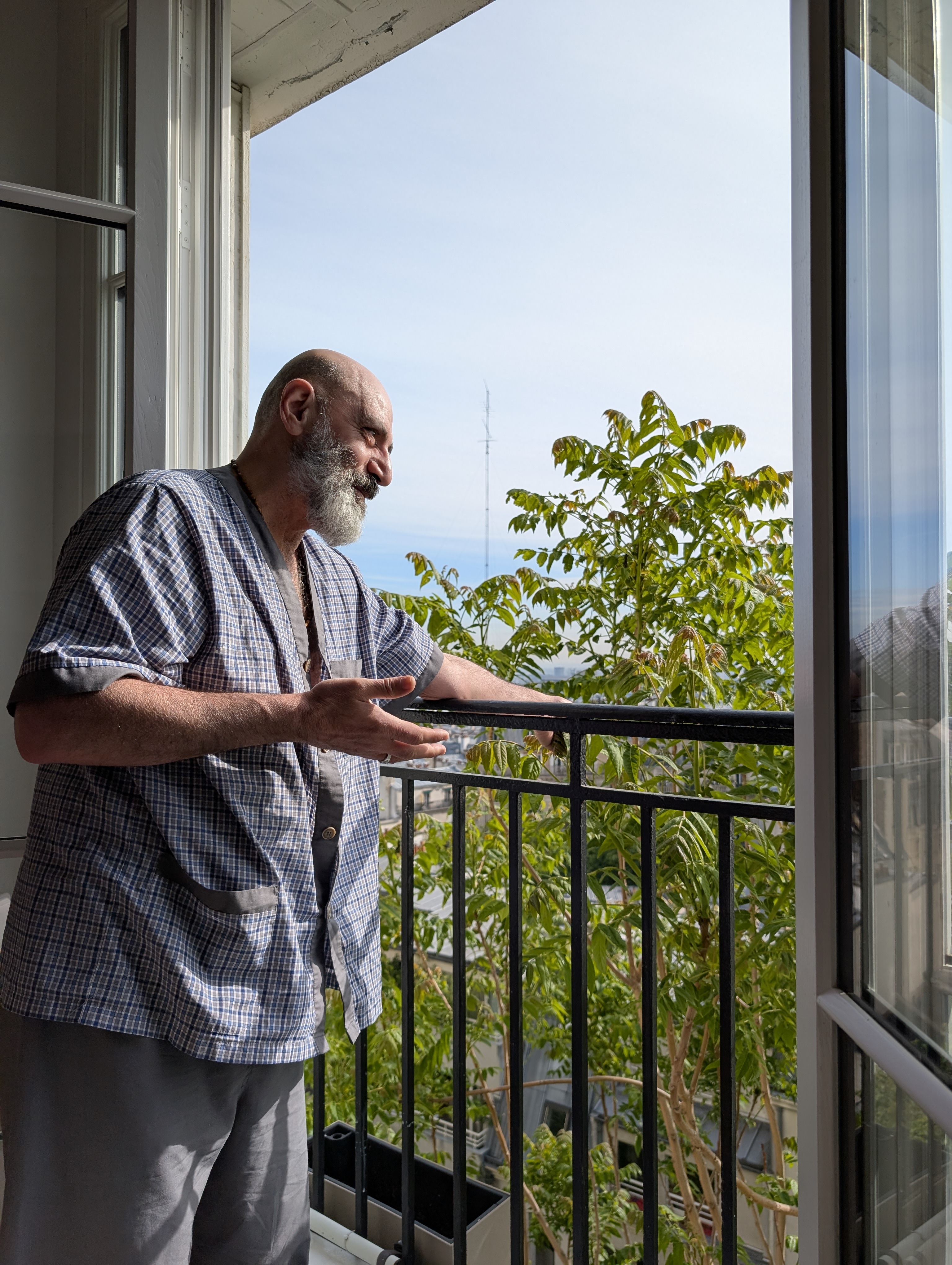
Woke up to flickering of trees at the balcony. The sun rises in my room. Something prevents me from closing the curtains in Paris…. a phobia of some sort .. an anxiety of separation from Paris, a fear of missing out. Our airbnb is on Mont Martre. Mont Martre is hill overseeing Paris, with the Sacre Decoer at the center of this hill. Streets draw circles around it and layers, and we are at the first layer after the church. Although we are on the first floor, but our balcony looks at the top of the buildings beneath us on the second circle. The tree tops reach our balcony. We can touch them with our hands. It is rare that you get to touch the top of a tree if you are not a bird or dreaming.
I don’t know what depression hits me when I am about to leave Paris. Perhaps because I am someone else in Paris, who I like. I am a writer… a poet…I would say a philosopher, but I hate philosophy. I glide over the streets like I am floating. The walls know me. They are alone when I am not here. I feel like an adopted son when meets his biological mother here. She has her life, and he has his, but there is a sad bond that we both avoid to talk about. She is exhausted and so am I. It makes her bitter that everyone is here but me. The streets are filled with them, but I am her son. They all see her, but she only sees me.

I write as if no one will read, nor do I want anyone to read this. I publish because vulnerability is the essence of writing, and without publishing, it is not vulnerable. But I wish nobody reads, because it is too personal, and who wants to read anyways when there is TikTok.

We got a fresh baguette from the closest boulangerie and a piece of brie cheese from the closest fromagerie, and some olives from a Tunisian grocery store owner, and sat in the park behind the basilica eating. Abe fed the pigeons again. He is fascinated by his ability to condition them fast, and he looks around to see if others are sharing his fascination, but in Paris, no body is fascinated by any other. The place has a spell and presence, that make us almost invisible in it.
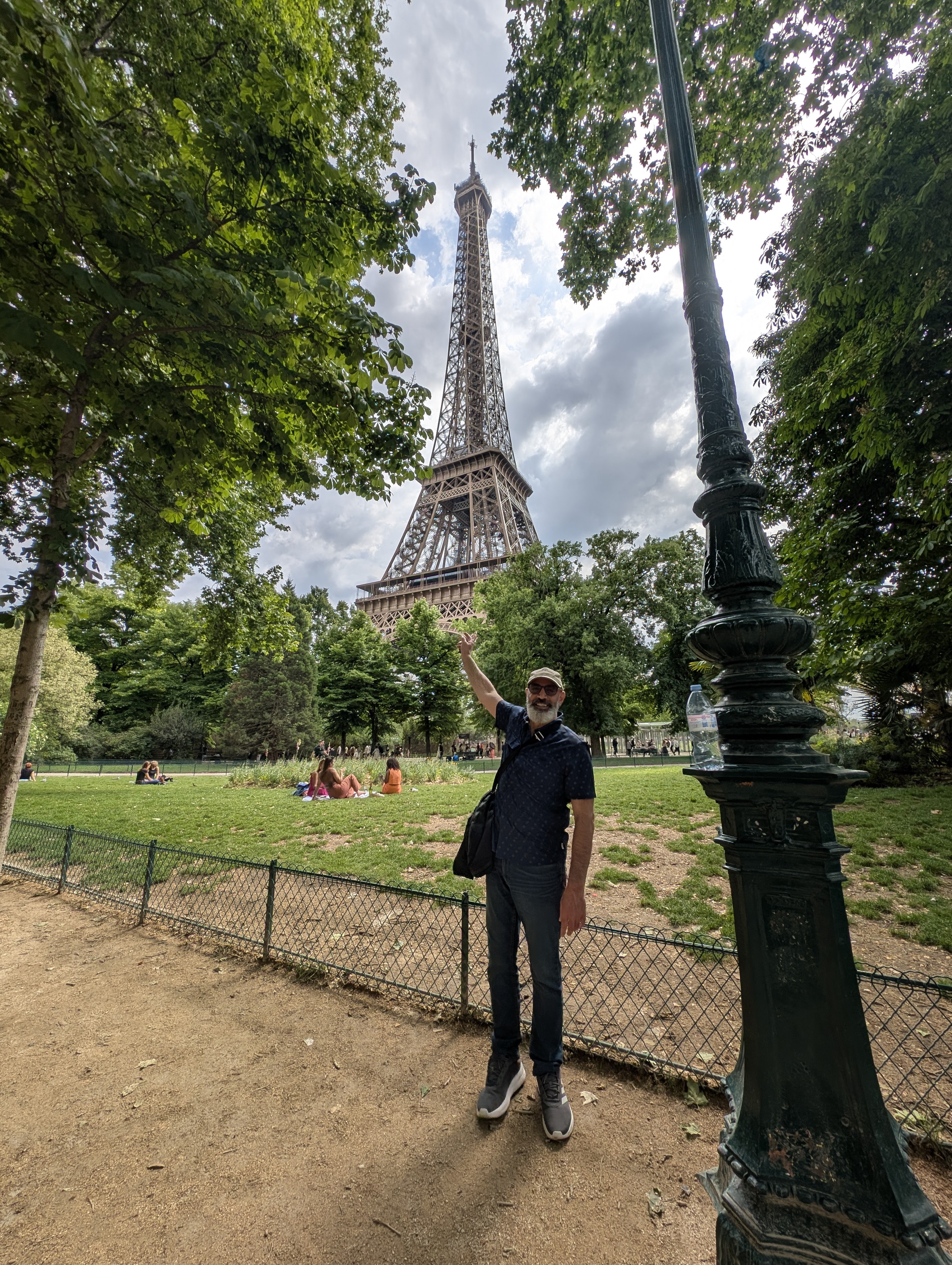
After we were done, we walked back to the apartment and rented bicycles (Lime) and drove them down to Eiffel tower. It is Abe’s first time, and he must visit it. All the grass area was seiged. There were heavy presence of police and what looked like army. Long lines were in place to go up the tower. The sky was cloudy, and african immigrants roamed the place selling chinese souvenirs and wine. We walked to a nearby coffee shop and patisseries and they were very bad and commercial. Restaurant servers tried to pull you to their restaurants from the sidewalk.

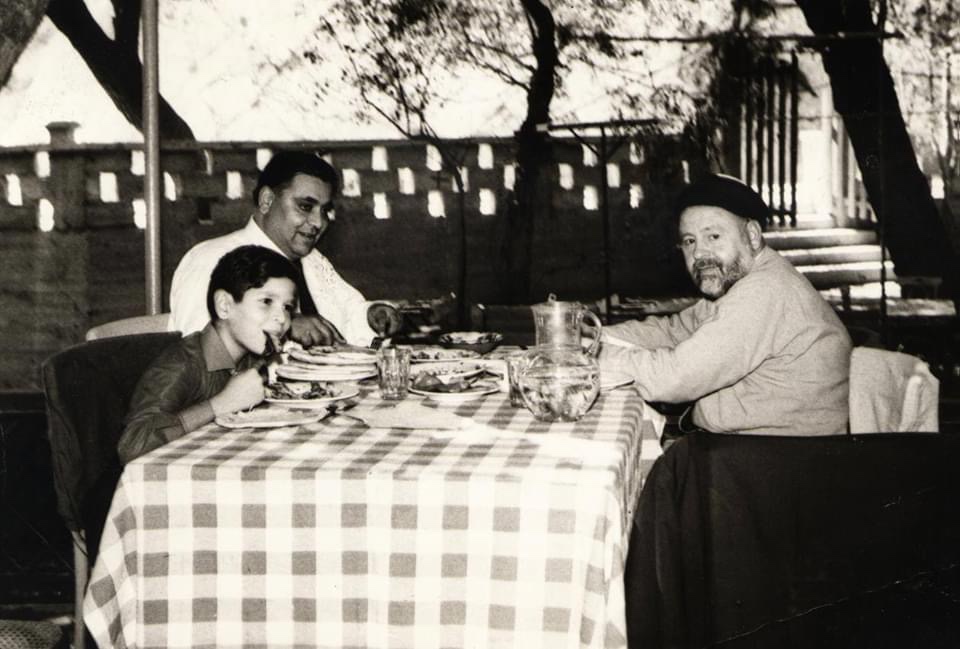
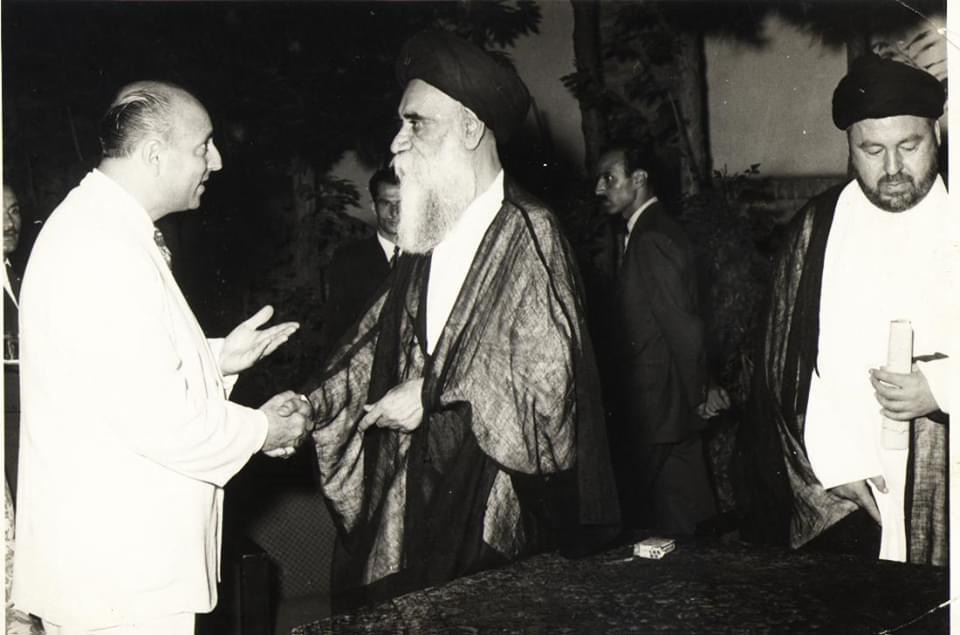
Then we took the bicycles again toward the Champs-Élysées, where we are scheduled to have dinner with the famous and huge Arab Poet and thinker, Adonis at 7PM. We reached the avenue at about 6PM, which gave us an hour to walk around. I entered a fragrance shop called ….. and the girl from Argentine, who knew Pablo Neruda, greeted us and showed us the perfumes. They were all between 200 to 400 euros, which means I will never buy them in my life. But nevertheless, I took the tour of smelling all the various sections, from the smoky and wooded, to the floury to the citrusy and fruity.

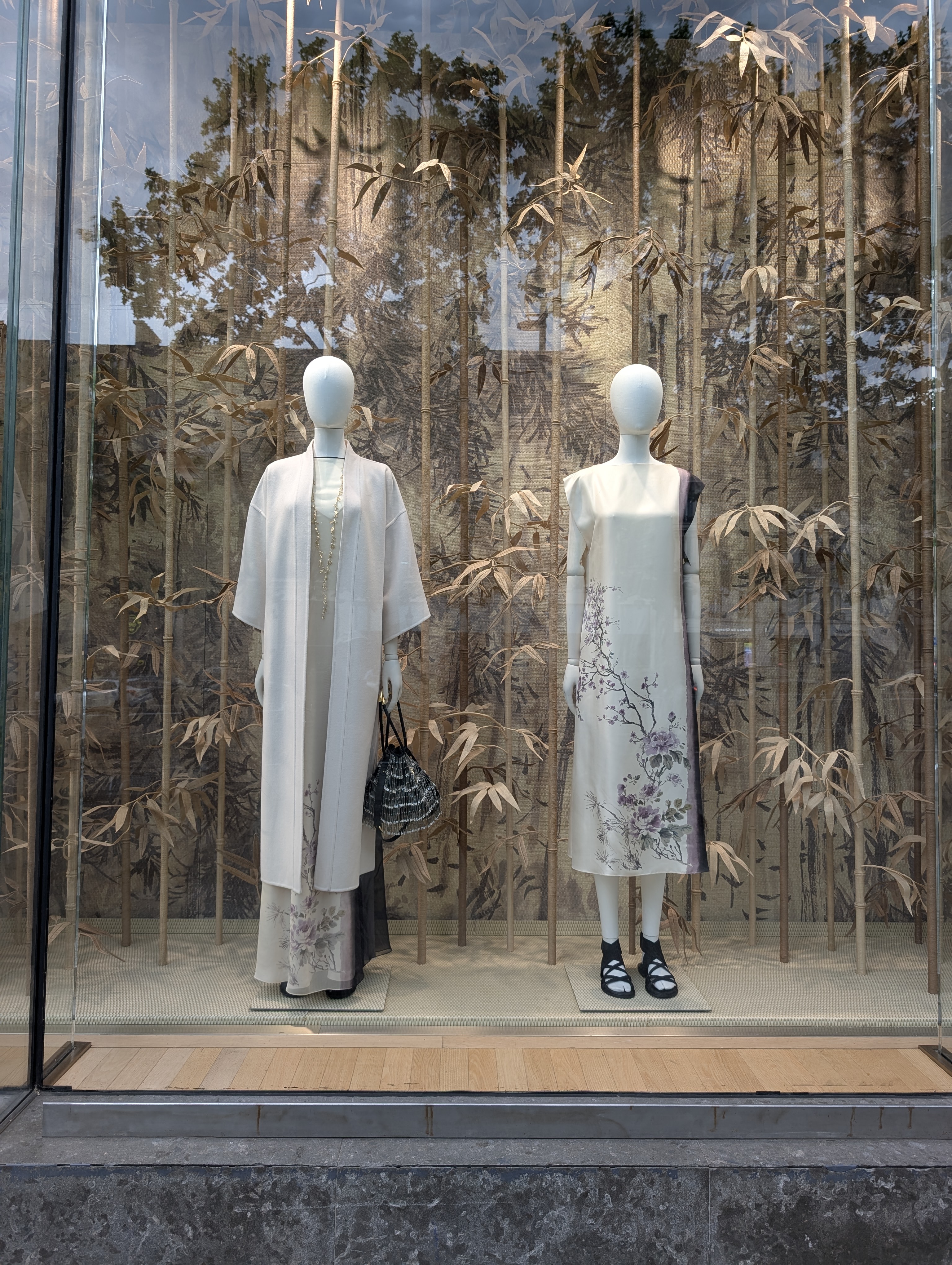
From Dior to Louis Vuitton … walking all the way to the Arc du Triomphe, strolling on the Champs-Elysees is a conflicting experience. I don’t like luxury or luxurious attitudes. For me, it doesn’t matter what level of wealth I have, if I am traveling in a plane, I will not travel First Class. I can’t stand the feeling of sitting down on a wider seat while others pass by you to their chicken coups and looking at you. Also, who cares about 5 inches extra and is it worth double or triple the price of economy class? If the First Class seats are reduced to economy, perhaps there every seat can have an inch extra. At any case, I don’t like luxury nor does it make sense to me. I understand fashion, but fashion should be accessible, not selective.

The number one real estate location in the world is 1 Champs-Elysees Avenue, which is Qatar’s embassy. With the price of that embassy, you could have empowered a million non-profit and civil Arab organizations that would change the Arab world. Nevertheless, I still appreciate them owning a valuable monument that will forever appreciate in the foreseen future of our world.

I watched as the Door man let people in and out of Dior. It is walking into a dream. It is beautiful, but inaccessible… inspirational, but unreachable. But there must be Dior in the world so there can be fashion. It is the divine of fashion that all other fashion strive towards. This avenue is the capital of merchandising. It is the epic of what the graphic design and commercial art have produced. It is a show of strength between these brands, that represent much more than a company for profit … Versace, Cartier, Boss, Gucci, Armani; They represent dreams of women and fantasies of men. They represent the tension between classes and the disorientation of the conscious of capitalism.

There was a gathering of some sort at the side of the Qatari Embassy…it looked like it is for veterans. The presence of armed forces under the Arc was noticeable. Protests usually start from there, so it is understandable.

At the end, we walked to the Ajami to meet Adonis.
Paris Again 3: Tuesday May 13, 2025 – Rue Lamarck

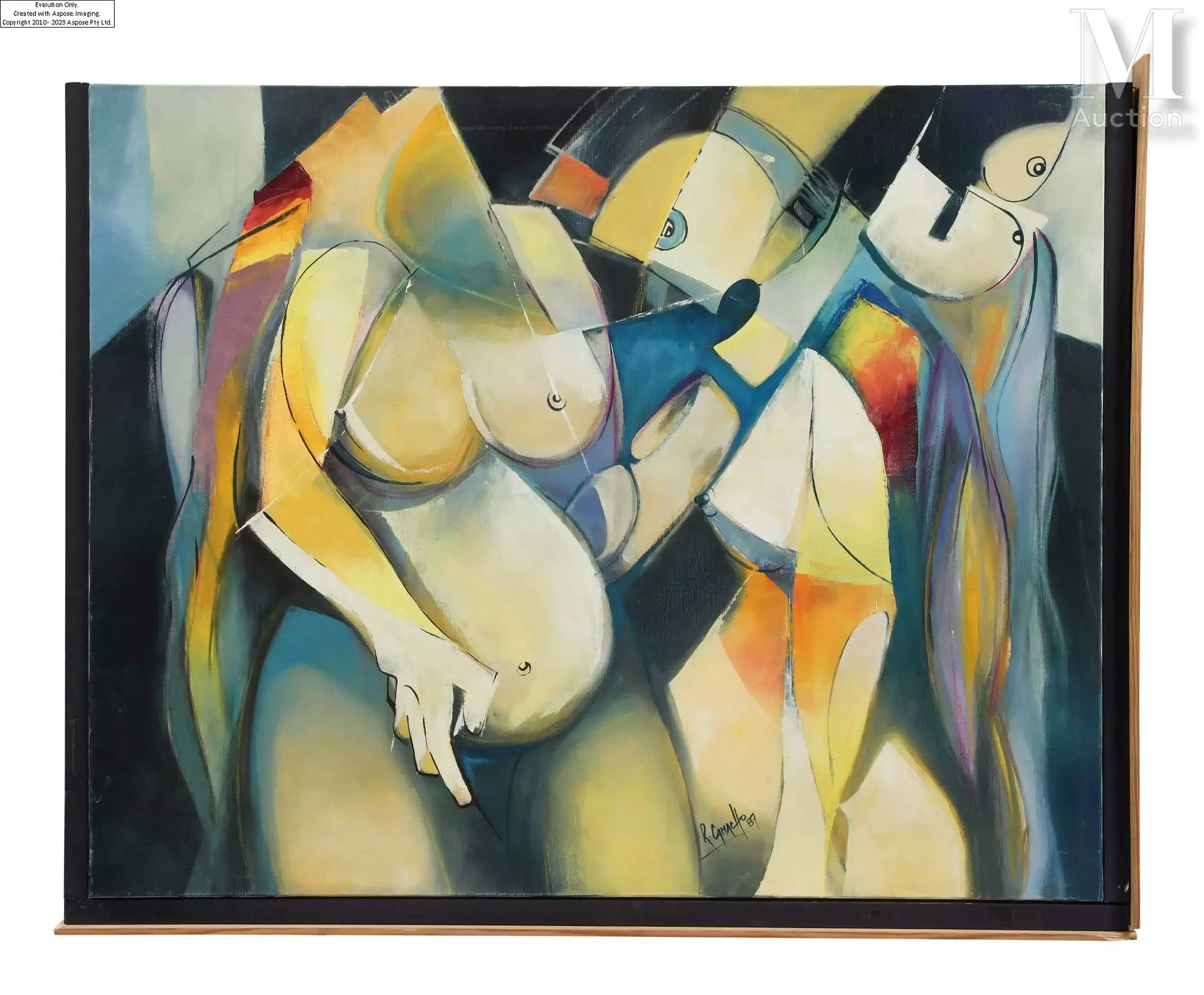
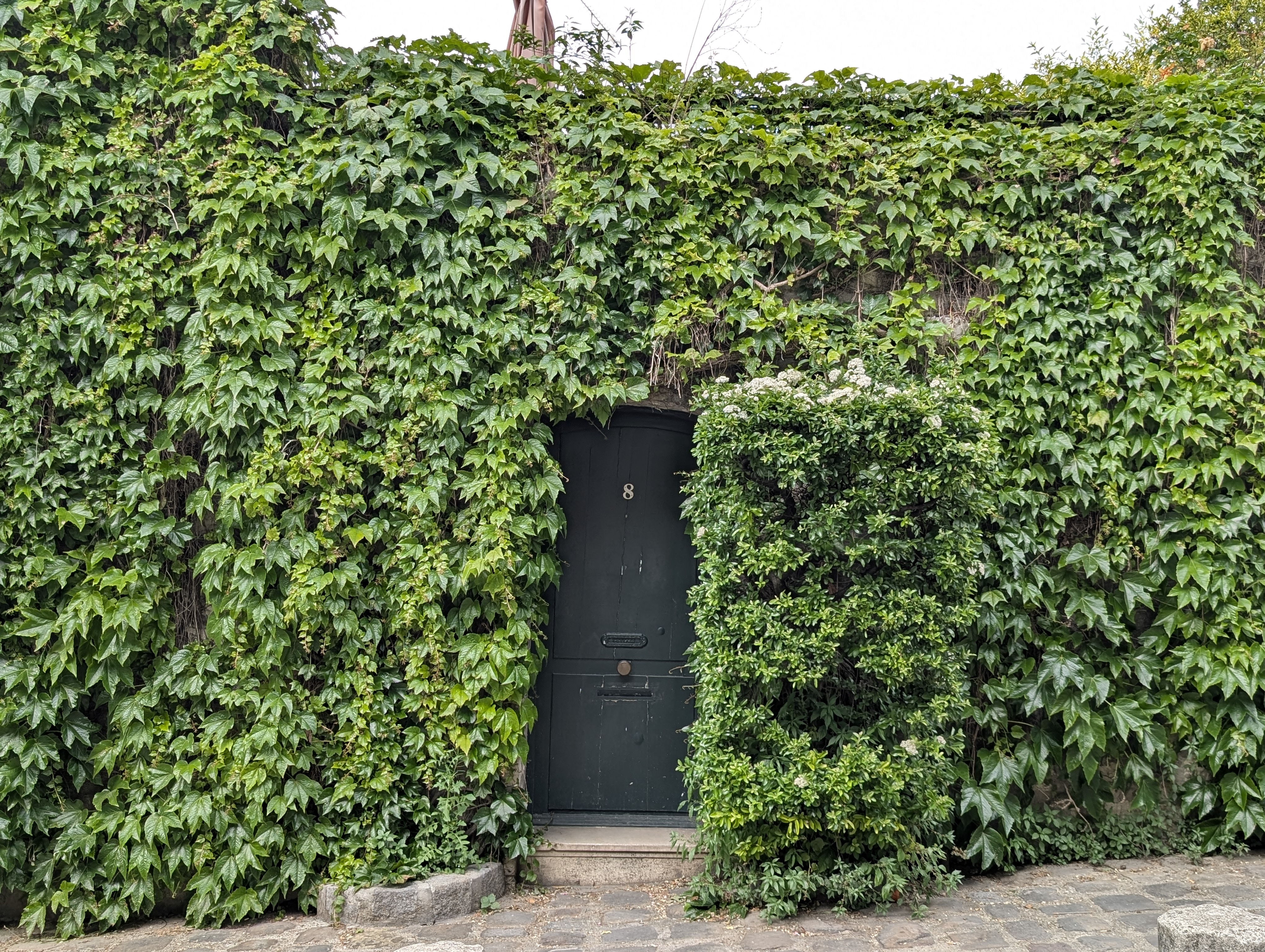
Woke up to a beautiful spring breeze in Mont Marte. Staying at 30 Rue Lamarck is a dream. Van Gogh stayed at 7 Rue Lamarck at his brother Theo. Rue Lamarck turns at the end of the street to the walkway infront of the Sacre decur Basilica, one of the most beautiful places in Paris overlooking the city of light. On Rue Lamarck also Ruben Camacho lived on 122.

On 39 lived Maurice Asselin.


Marius Borgeaud on 43


Roland Dubuc on 24

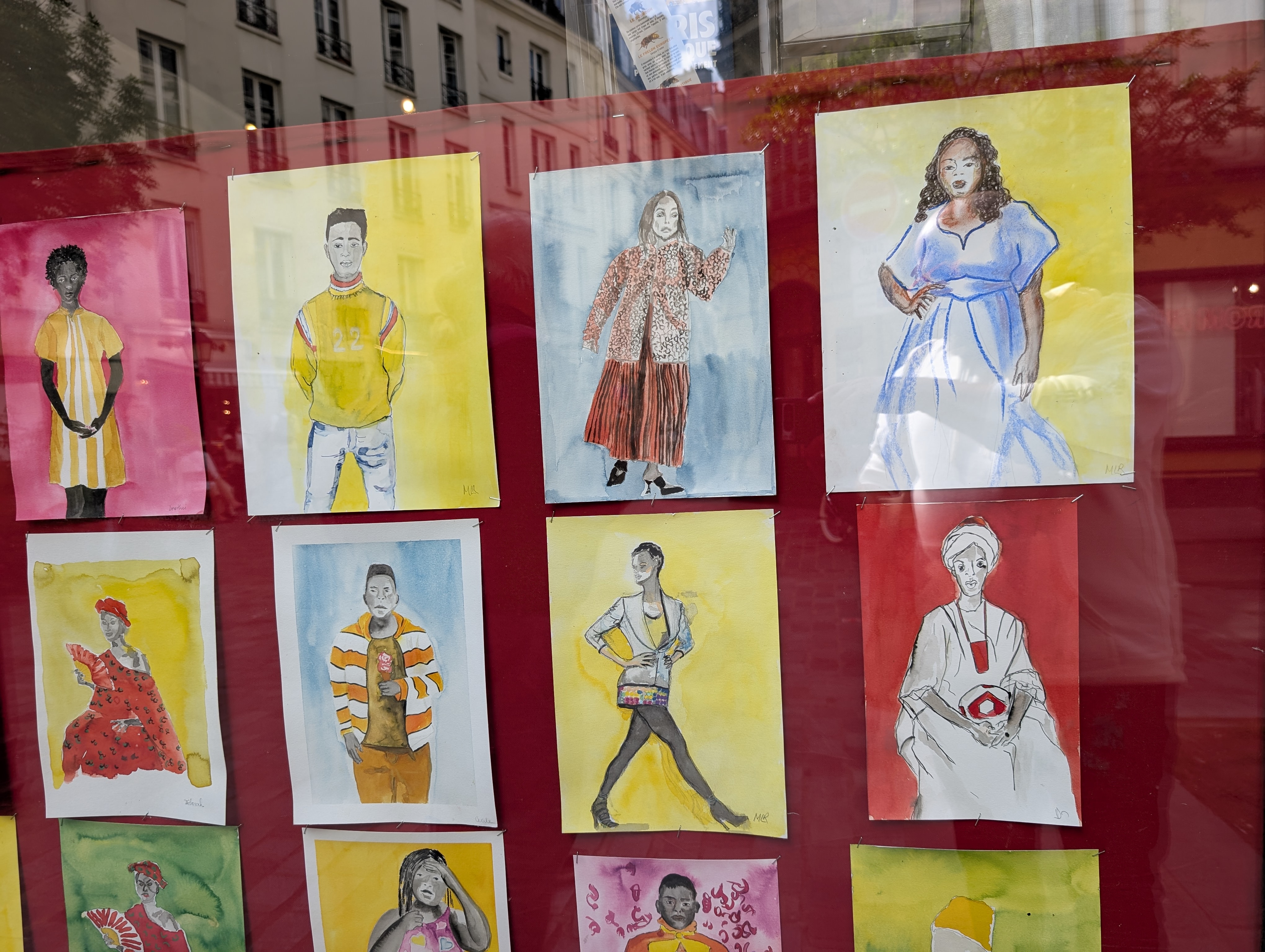
It is steps away from the Place du Tertre where the artists congregate:

And the place is combination of the best of Parisian life, food, people, scenery, and mode. The tourists don’t crowd this place as much as others, especially if you stay off the couple streets that they gather around like ants over candy.

Paris Again 2: Monday May 12, 2025

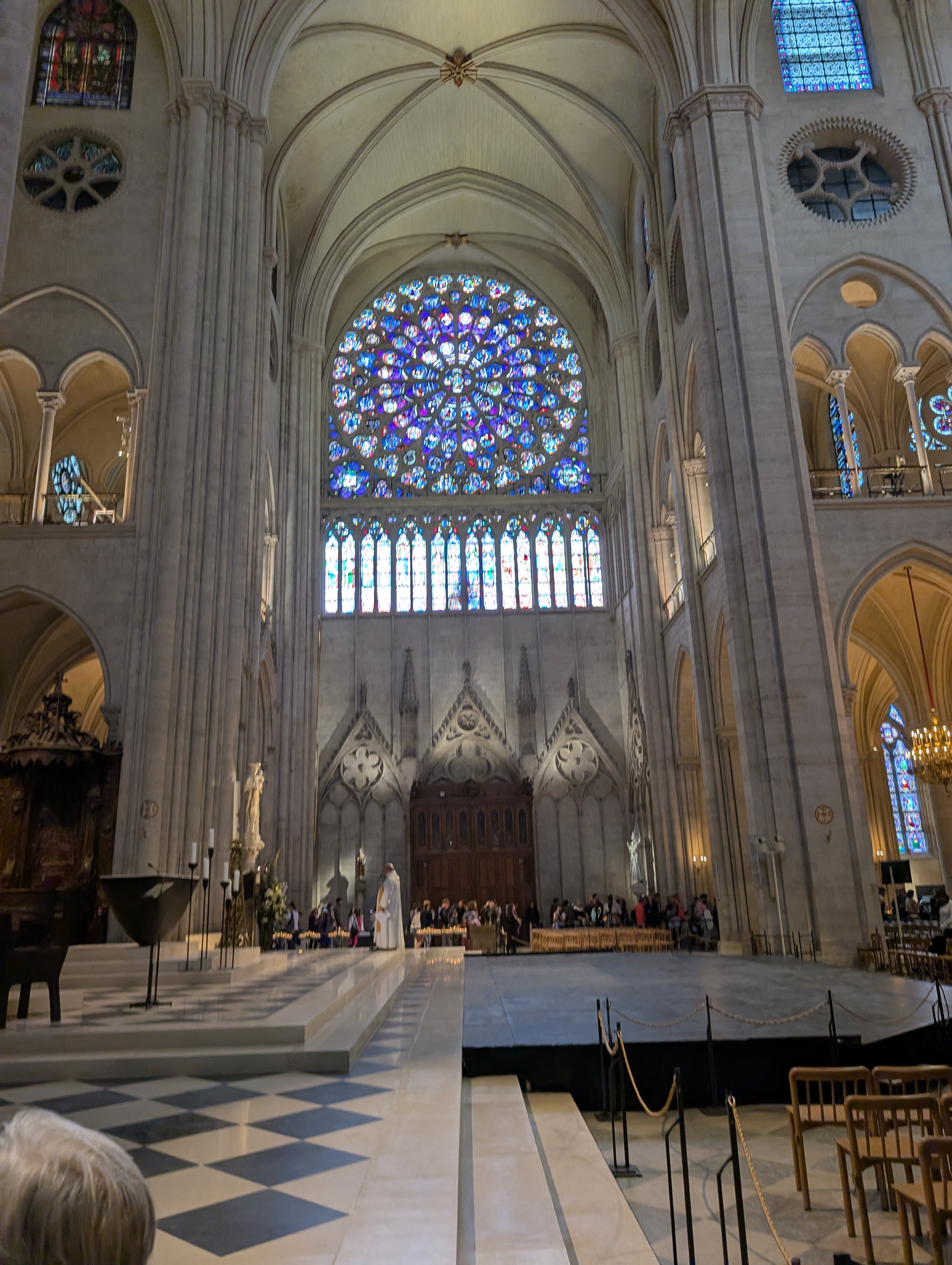
Today, I was more like a tour guide for Dr. Ibrahim Atallah. Let’s see Paris. Well, it should start with Notre Dame du Paris. Just reopened after year of restoration after the fire, the line went fast, but the amount of people was still very large. Although no phones allowed, it was impossible to enforce that with hundreds of tourists taking pictures and videos. We actually walked in while there was some sort of a service or prayer being recited. The priest kept hushing the tourists to no avail. Tourism took over the Church. People visiting the house of God overwhelmed those who are praying to him.

The priest was white bold with a white golden-ornamented robe. He had a large belly that pulled the robe from the front upwards. He stood infront of the sculpture of Marry and prayed in french repeating the same prayer over and over. Maybe they were hailmeries. I don’t know.

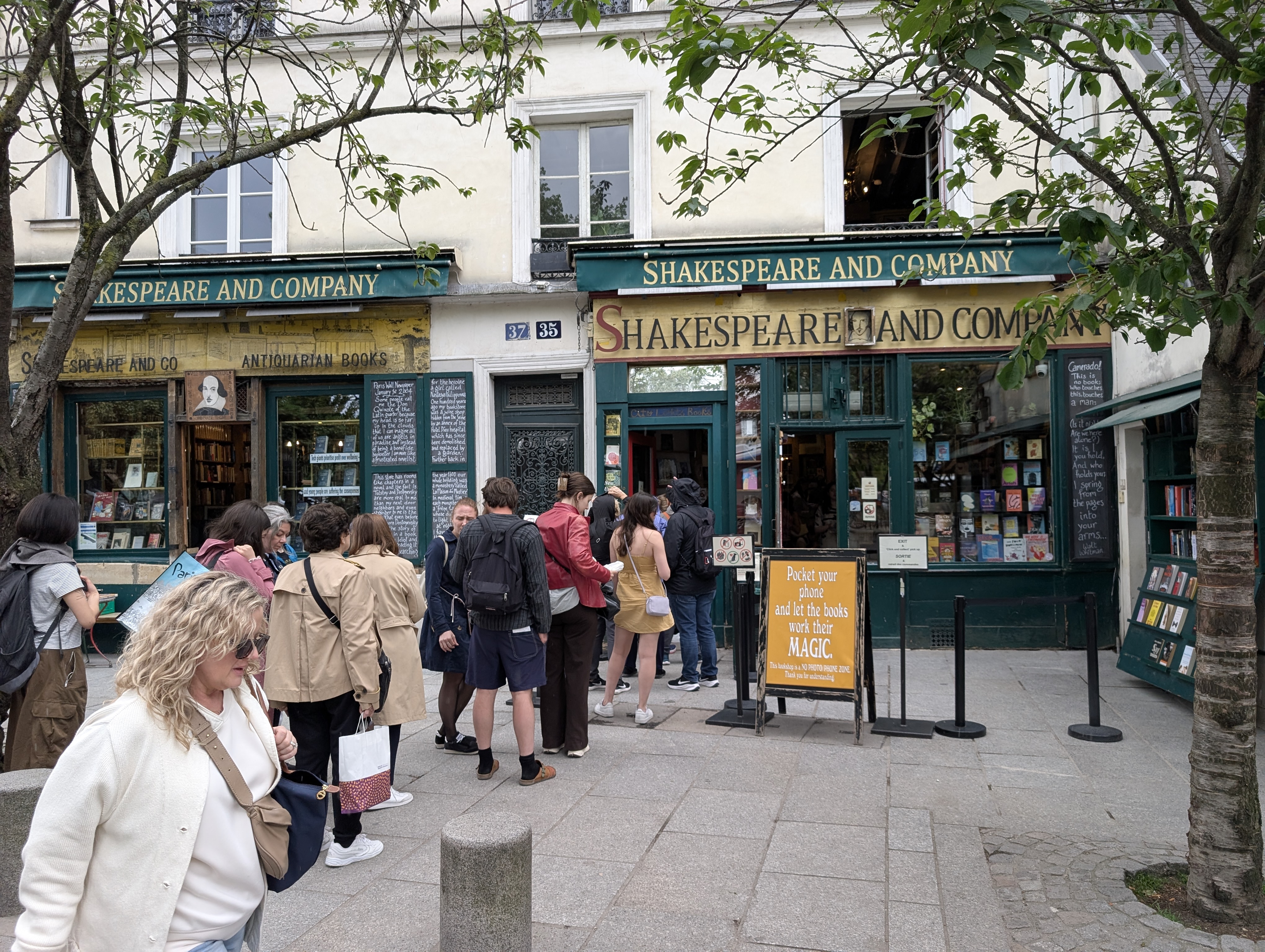
Tourists still crowd the place with their phones and plastic sneakers. At Shakespeare and Company, there was a line to get into the book store. As for the cafe, they have a rope that closes the door now, and they have to let you in. The place is so small, and i can imagine the employees being overwhelmed with waiting tourists. I doubt that most tourists know the value of this place. We ordered a flatwhite and a lemonade, and it rained. We stood under a canopy drinking them, then walked to the park across and sat. We noticed a mostly green colorful parot on the tree. Tourists were stopping to take a photo of it. I wonder if it is a run away parot. It won’t survive much once the craws get to it. The pigeons had a common left foot injury for some reason. Abe kept trying to feed the pigeons from his hands. It wasn’t difficult to condition them to do so. They exceeded his expectations…. his American expectations at least.

When we returned our cups to the cafe, the book store had no line, so we walked in. I ended up buying “Flirting with French” by William Alexander. I can not resist my affinity to books. I have to feed my urges every once a while with purchasing one.

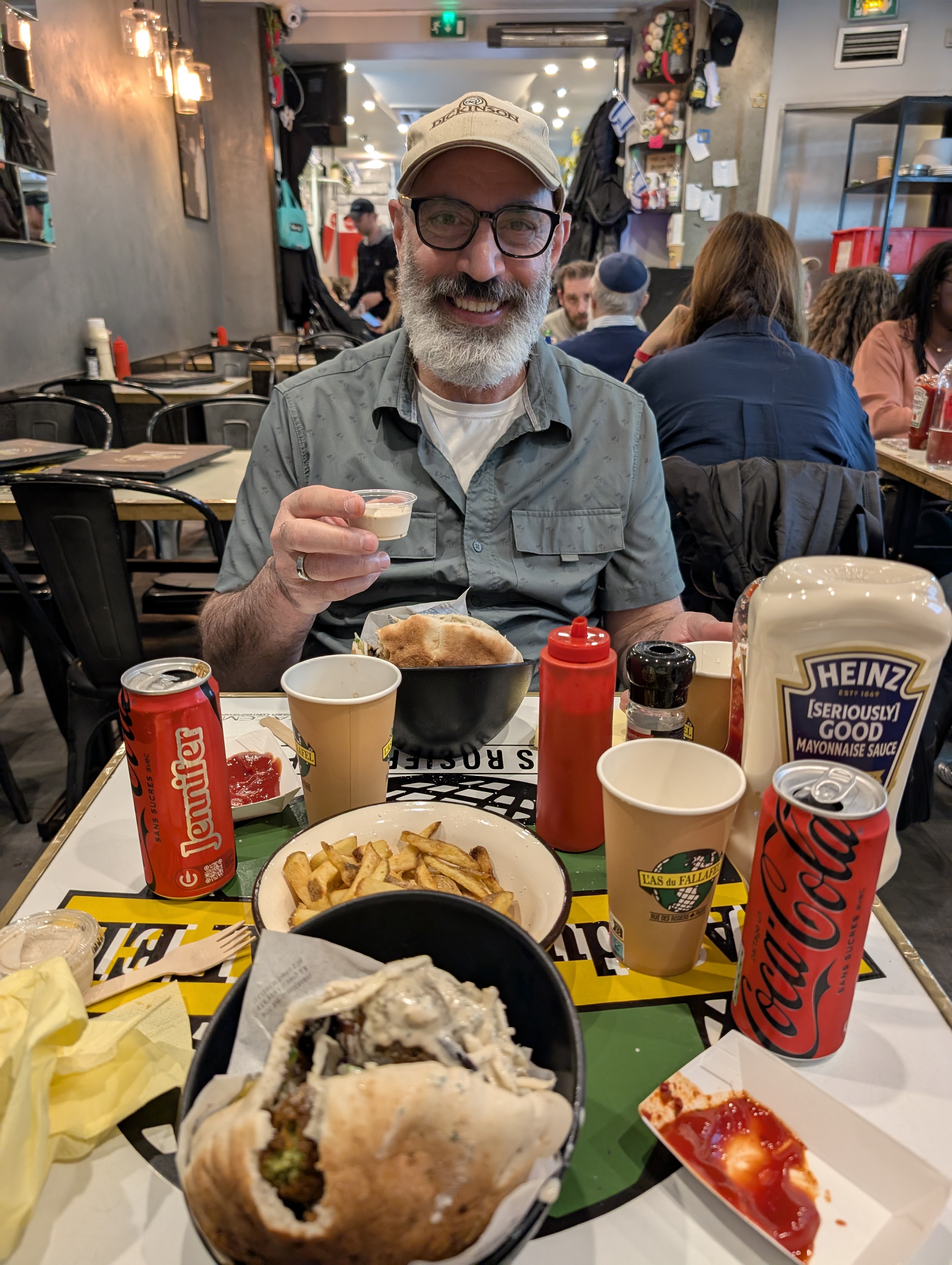
I am writing this few days after, and my memories now are starting to mush together. We walked to to the Jewish Quarter where we ate a falafel. Abe spoke to them in Hebrew, which he spoke better than them. We sat in a cafe afterwards that had few drunkards playing music, and drinking something from large plastic water bottles that was dark… probably homemade wine.

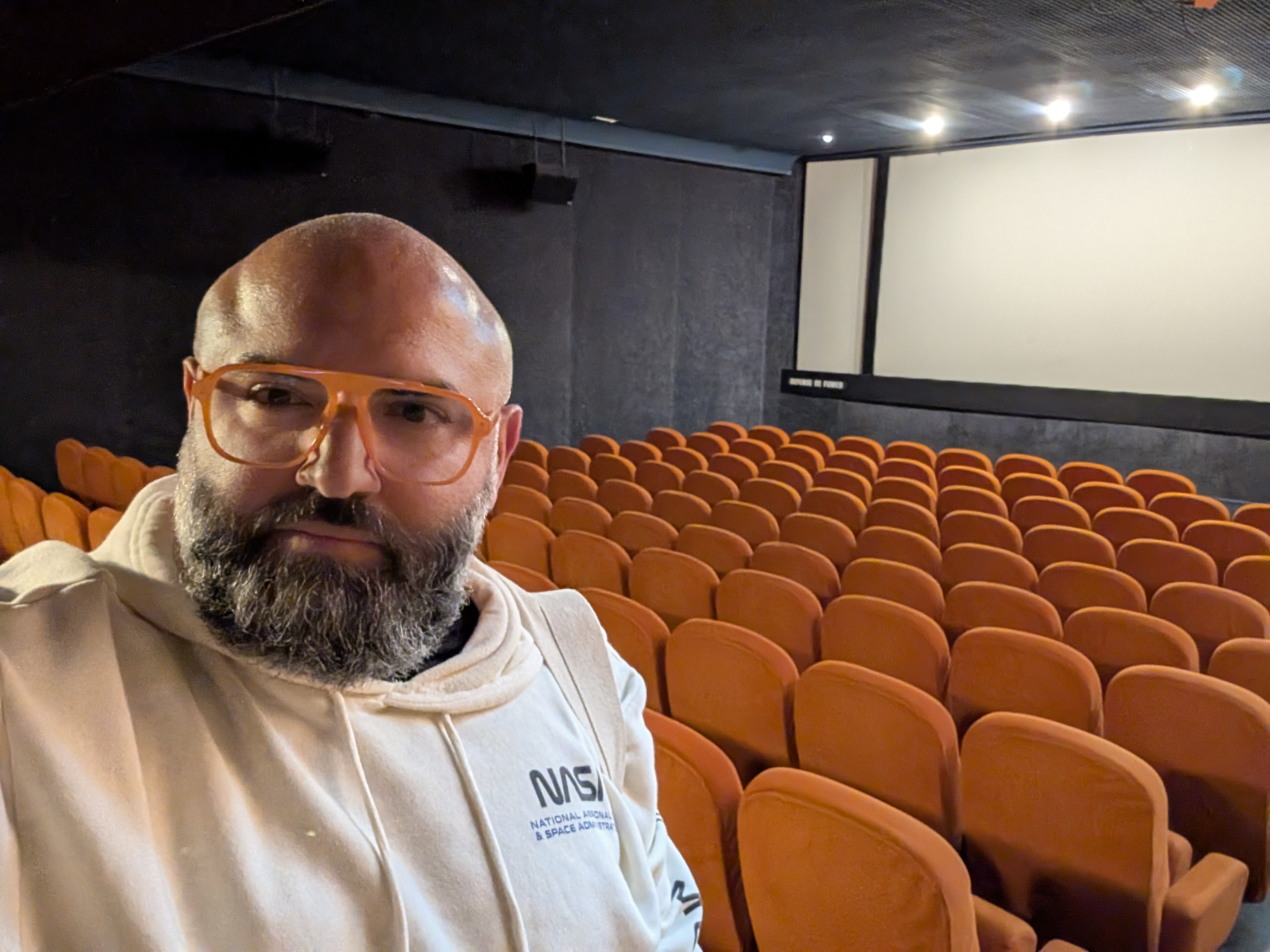
We walked to the historical movie theater, Le St Andre Des Arts, across of Chez Lebanese in Saint Michele and watched a movie titled Bring Them Down with Christopher Andrews. It was a powerful thriller about confused masculinity, trauma, vengeance, and a bunch of ugly themes. I didn’t like it, although it is very well done.

The night ended with a saj sandwich of Jibny for 6.8 euros.

Paris Again 1 – Sunday, May 11, 2025

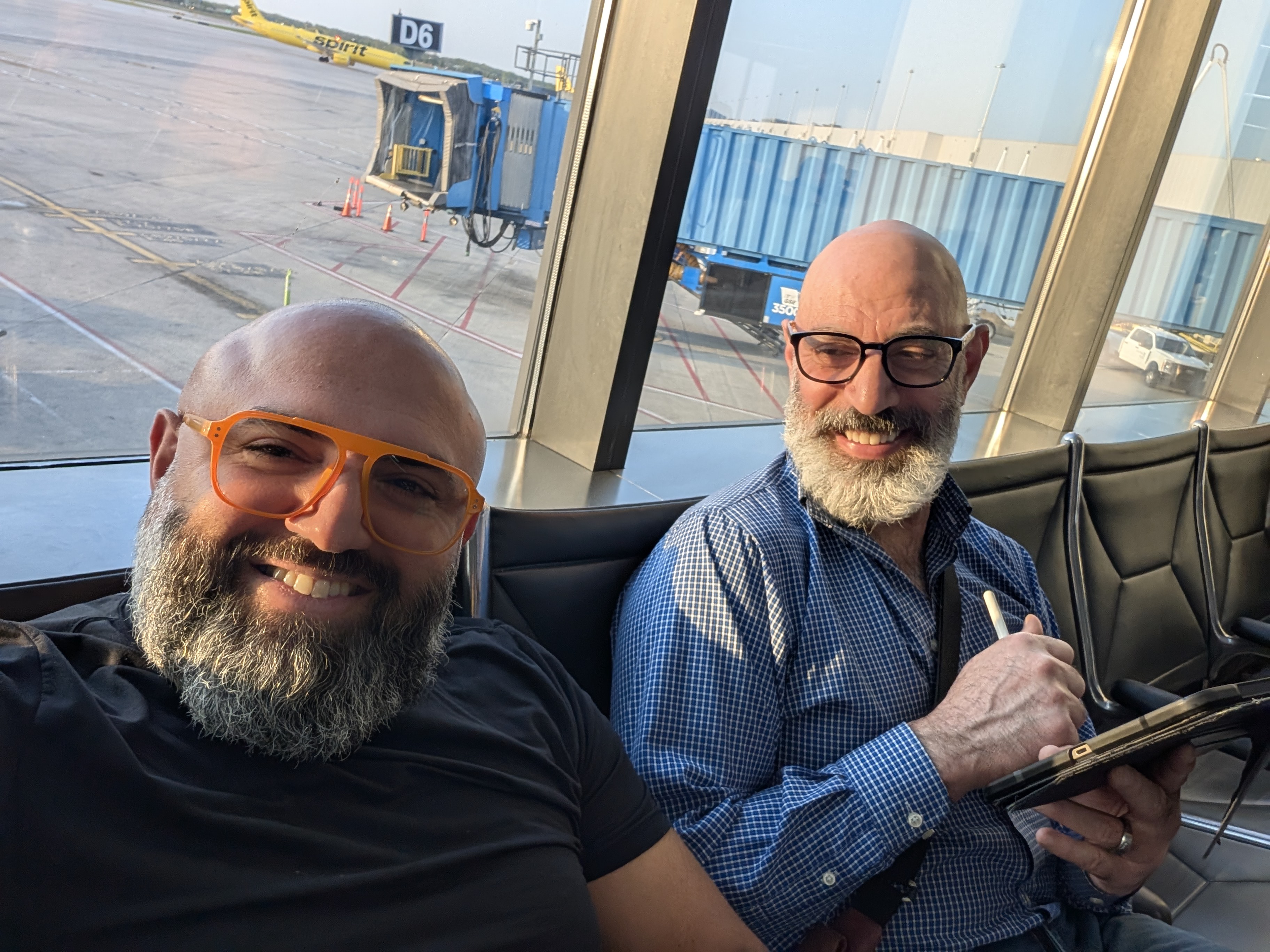
Left Detroit on Iceland Air with Dr. Ibrahim Atallah on Saturday night, reaching Iceland in the morning. The airplane ride was smooth as usual. Iceland Air is like Iceland, friendly, smooth, serene, and humane. Iceland is such a perfect entrance into the European Union. It is always a breeze, and the wait is short. The whole transit time is about an hour. To tell you the truth, I wish it was longer so I can enjoy some of Iceland on the shelves of the airport, or at least eat one of their famous hotdogs.

Arrived in Paris at 1PM, and took bus 350 all the way to Porte something, then took metro 12 to Monte Martre where our airbnb is. The apartment was a wonderful choice, with breeze windows and nice view over Monte Martre and the back of Paris.
I come to Paris for no reason but to return home. This last year and the beginning of this year have been so hard on me, that I needed a break. Paris is a refuge. It has been a refuge for all thinkers, writers, and painters. The beauty of it and humanism heals.

We walked the streets of Mont Martre. As usual, tourists blanket the city like street pigeons, like a rat problem, but they blend in. The walls love them, and the streets don’t mind them, and Parisians have settled to live with them. It is sunny and breezy, in a perfect May. The birds chirp in french. Girls smile and smoke. Cafes are still filled. They are check points of social life in Paris. You must socialize to pass.

Memoir Part 10: Lebanese Summer Vacations

My relationship to Lebanon is the relationship of a son to a war torn mother who has, under the heavy struggles of war, forgotten that her son even exists, but when he shows up, she hugs him unaware, with empty attention, while gazing to the fires and bombs in the horizon.

I was born a year after the country’s civil war has started, and grew up to the loud broadcasting of the news over the square TV with the distorted pictures of blood and destruction and very serious newscast sound. We received the newspaper daily to the house, and the big headlines were always negative news from Lebanon or Palestine.

There was always war. The modern history of Lebanon is a sequence of small battles and wars among everyone. The number of battles is almost equal to the number of possible combinations between all factions. Yet, we visited Lebanon almost every year in the summer.

My father is from Sour, called in English Tyre. Sour is a peninsula on the Mediterranean. Sun rises from the sea to greet the sailing fishermen every morning, and sets in the sea from the other side flickering its golden rays on the big arch of the ruins of its fort and old roman city, and greeting its farmers returning home after a hard day of work. Sour is a magical city, with kind people, and educated, smart, and religiously diverse inhabitants. Sour was mentioned in the bible 12 times, and is one of the oldest cities in history.

My mother is from Bintjbail, a city in the Mountains of Amel in South Lebanon, 300 meters above ground, embedded in the beautiful valleys of olive, fig, and almond trees, and orchards of grapes and tobacco.

When we went to Lebanon in the summer, it was only 2 hours away from Abu Dhabi airport. Dubai airport did not exist at that time, and when it was found, it wasn’t that popular yet. There was one airport in UAE, which was Abu Dhabi. I still remember the smell of humidity, sea salt, and the sweat of my father mixed with the finest French colognes. When we get to Lebanon, it was always hectic. The beeping, the chaos, the worry, the fear, the warmth, the multiple military presence, and the complication of everything, mixed with the complications of people.

Depends what year we visit, there would be different portraits in the airport, celebrating different personalities, and there would be a different uniform dressed forces. Also, it will make a difference in the number of check points, and their kind.

From the Syrian army, to the Syrian secret service, to the Lebanese Army, to Hezbollah, to Amal Party, to Alansar (who are fans of Jamal Abdulnasser), or Palestinians, to Lebanon Southern Army (the traitors), to the Israeli army. That is if you are going south. If you are going north, or up to the mountains, or down to Baalbak and the valley, there will be a different sequence of militias and armies, in a country that you can cross from North to South in about 4 hours if unobstructed.

I remember in one of the trips, we had to stop by 17 check points in a trip that is supposed to be 45 minutes from the airport to Sour. Every checkpoint has its own inclinations and questions. Some were on “our side”, others we were weary about their questions. Some needed a bribe, and others needed to search the bags.

At the end we settled with my family. My paternal grand mother was always the warm chest that received us. Charafeddines are very emotional family, and the amount of emotions shown to us in reception was over whelming.

To be continued …

Memoir Part 9: American Summer Vacations

“These guys went to America!”

Random boys playing on Korneich would gather around me and my brother, Hamoudi, and ask questions about America.  Their eyes flickered with excitement.

“Did you see Michael Jackson?!”

“How are the girls there?!”

“Did you meet Rambo?!”

Going to America was not a common thing if you live in UAE in the 80’s.  If you live in Khor Fakkan, that makes it even more unbelievable.

My mother would shop for most of our clothes from America.  We dressed in American fashion most of the time.  My mother is from  the Bazzi family, from the city of Bintjbail in South Lebanon.  Bintjbailers form the majority of immigrants from Lebanon in the Detroit area.  Now they form the majority of Dearborn to an extent that you can call Dearborn a second Bintjbail.

The first Bazzi to immigrate to Dearborn did so in the late 1800’s.  I didn’t know the story till I asked my uncle, Khattar, couple years ago.  The reason I wanted to know is that of a racist Border Patrol Office at the Ambassador Bridge Canada-USA entry point. Here is the story:

I was crossing the border coming back from Canada with my wife and kids, coming back from Toronto.  The Border Patrol Officer asked me how I got my citizenship since I wasn’t born in the U.S.

“I got it through my mother”

“And how did your mother get it?”

“She got it through her mother”, I said.  I was waiting for the racist punch line.

“And how did she get it”

“I don’t know,” I said, and here it came:

“You see, it is like a rolling snowball”!

As far as I know, a rolling snowball has a negative connotation.  It describes a negative event, not a positive one. The last thing I want to do as an Arab American, Muslim American, dark-bearded, Dearborn-living, UAE-born, citizen is to argue with a Border Patrol white officer with a blond mustache, and blue eyes, while his President is Trump. so I didn’t say anything.  I am just waiting to pass in peace back to my country.  The only government that gives me a hard time in passing is my government.  The problem is, I can’t call the embassy when the border patrol officers are the harassers.

What I really wanted to reply is to ask him “How about you? How did you get your citizenship?”

And if he says I was born here, I would ask him how about your parents, and keep asking him till we find the immigrant grandparent, then I would say: “You see, it is a snowball effect”.

When I came back, I thought to myself, “How did my Grandmother get her citizenship?”  So I decided to ask my uncle, and he told me the story that goes all the way back to 1870’s when the first Bazzi left Bintjbail and came to New York, then to Detroit.  It turned out that we had veterans from World War I and World War II in the family, and that our family probably had deeper roots in the US than the blond mustached officer.

My maternal grandparents, Yousef  Saleem Bazzi and Mariam Mohamad Saeed Bazzi had 6 girls and 3 boys.  2 of my aunts and two of my uncles were living in the US at that time along with my grandmother.  We would visit and stay with my grandmother during different years.

My earliest recollection of such a visit, I was probably 7 or 8 years old.  I remember the old bags, now called retro, with their so boxy feel and heavy exterior.  I remember my father’s 80’s black mustache.  I also remember the long trip in the smoking section of airplanes. Yes! Smoking section! Airplanes had smoking sections were people smoked in the airplane, and the ashtrays were attached to the arm handles.  I remember getting sick in the airplane.  We travelled mostly on British airways, and we stopped at Heathrow for few hours.

I don’t remember pleasant traveling experience to the USA.  I mean the journey itself.  My parents were always stressed, always over packed (just like most arabs), and seemed confused.  They didn’t speak good English, and any change to the itinerary would throw them off.  We mostly travelled with my mother, and my father followed, or left earlier. 

My mom stresses out very easily over anything pretty much.  I feel she is stressed by default.  I don’t even recall her not stressed.  The memory of her being stressed overwhelms everything else.  I mean, it wasn’t all inherent or internal. Many of what stresses her out was out of her control, and due to dealing with all the non-expectancies of life, ill preparation, or lack of responsibility of others.

My maternal grandmother, Mariam, Im Fouad [mother of Fouad], is a wise well-read strong woman.  She immigrated in the early 70’s to the U.S. with her younger daughters and sons, and established a life out of nothing, with no English, and no money.  I am not very sure about the details, but I know that my grandfather has married a second wife while married to her, and that was the end of their relationship.  Very soon, she found a way to flee the war torn region, and the dysfunctionality of the family, and start a new life in a new continent from scratch.

This time, which was the first trip to America I can recall, my father travelled with us at the same time, and we arrived to Detroit Metro Airport, where several relatives are waiting for us at the door of the gate.  My mom hasn’t seen her family for years, and we pretty much didn’t know my grandma, aunts and uncles in America.  Rare expensive phone calls were made, with poor quality, shouting across the line to make the other hear you, and then sending back and forth cassettes with voice recordings were the only ways of communciation.  We gathered around the cassette player to hear my grandma or aunts speaking to us, in a one way, severely delayed, messages, but full of love and emotions.  The reception in the airport was tearful, passionate, and dramatic.

My grandmother lived in a small second floor apartment of a small house in Detroit, above my great aunt (her sister Im Hassan).  I think it was a two bedroom apartment.  They gave us one bedroom to sleep in that barely fit a queen bed, and everyone else slept in the other room.  I woke up to my mom’s unpacking the bags, and distributing gifts.

It was Detroit in the 70’s.  Muscle cars, Holkogin and WWE wrestling, Michael Jackson, Madonna, the birth of Pop, and Detroit was devastated by the civil riots that took place in the 60’s.  One of my uncles worked in a gas station while studying mechanical engineering, and the other worked as a security guard, guarding various locations as needed.  My aunts worked in restaurants and went to school. It was a simple happy life.  We became friends with some of the Arab kids in the neighborhood, and spent ourtime running around the neighborhood.  But at night, it became dangerous, and we needed to be in doors before sunset.

Often the streets at night filled with cars with loud music, and African American guys and girls danced in the streets.  Gunshots were familiar, and fights were random and frequent.  Me and my brother Hamoudi were too innocent and young to understand racial divisions, tensions, racism, crime, and other American signature dishes.  We just played with everyone, and took our dimes and nickels to the liquor store to buy delicious American candy.

Our relatives took us to parks, Niagara Falls, to Houston once, to california another, but I don’t remember out of these trips anything but exhaustion.  Playing in the neighborhood with friends were more memorable, and eating pizza delivered by my aunt’s fiance was the most delicious meal ever.

Everytime we would visit America again in few years, my aunts and uncles would be older, more well off and established, and everyone in newer houses.  America would be a little changed.  Eventually, by the late 80’s, everyone was living in Dearborn, mostly white city at that time, with nice cars, degrees, few kids running around, and professions.  My grandmother remained the rock around which everyone gathered and she unified the family and brought wisdom and stability to the group.

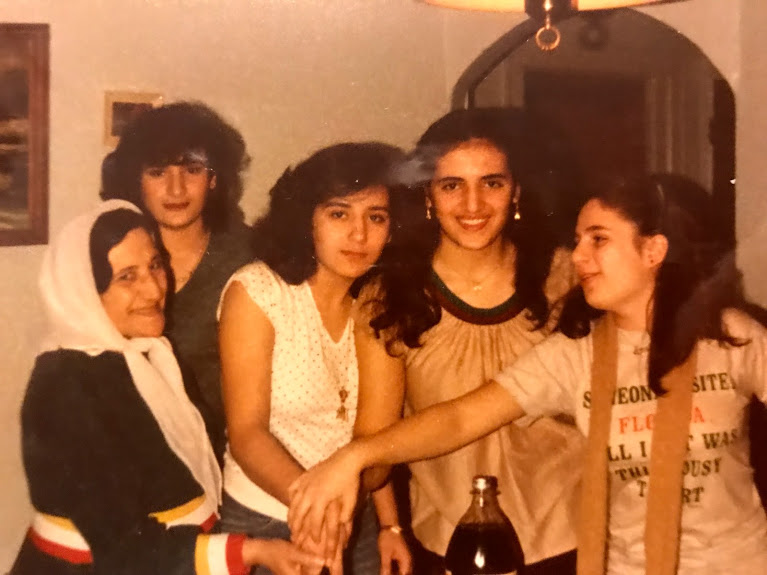
From Left to Right: Grandmother, Aunt Mona, Aunt Ghada, Aunt Iman, Cousin Amal

Memoir Part 8 – Abu Mohamad – Sheik Kishk – Summer Vacations

Abu Mohamad was the Natoor (guard) of the bank over which we lived and where my father worked as a bank manager.  He stayed there for the afternoon and all night guarding the bank.  In a village like Khorfakhan, that is pretty much the most boring job.  I had lived in Khorfakhan for 6 years, never hearing police sirens once.  There was literally no crime.  As my dad was friends with the head of police, he came to our house occasionally.  He was a very obese Emirati man, with a great sense of humor.  I always thought as a child to myself: how is he going to run after a robber with his obesity?!  I later understood that the chance of that was almost none.

823376In the afternoons of UAE, everyone sleeps.  The sun becomes scorching hot, heating up the black mountains around it, making the city feel like an oven.  The ground becomes so hot, that you can fry an egg on it.  You barely can open your eyes.  The Tropic of Cancer passes through UAE, which is the closest line to the sun on Earth half of the year.  Wecan’t even touch the windows of the house. We used to play me and my brother Hamoudi by getting two pieces of ice cubes from the freezer and pushing them into the window and seeing how fast they would melt.  If you were unfortunate enough to forget a plastic toy in the car during that time, mind as well you forget about it, because you will find it a coiled piece of melted plastic.

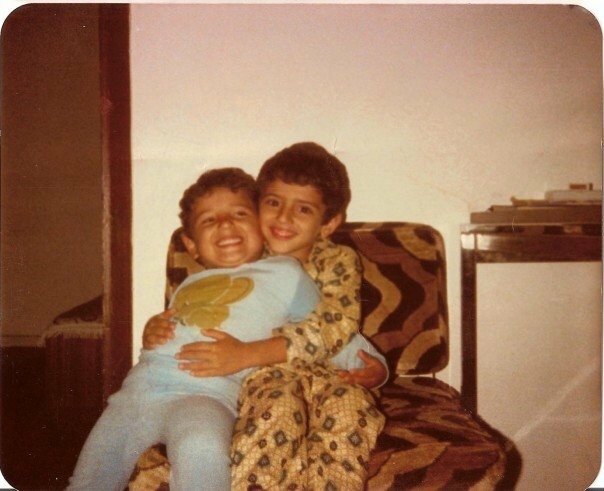
My parents slept in the afternoon.  My brother slept too sometimes.  I was left alone to figure out what to do.  Remember, at that time, there were no cartoons on the one channel TV, no electronic games, and no internet.  We would invent games.  One of my favorite games was playing Muslim conquest.  I would open my big Atlas and plan “opening” one city after another in the World.  I just used my imagination, a towel as a cape, and a stick as a sword.  I rode the back of the sofa as a horse and fought with imaginary warriors.  That actually strengthened me in geography.  It took years of playing this game before I finished the whole Atlas, hence occupying the whole world!  I actually kept playing that game all the way till when we immigrated to Windsor.  It is a game that grew with me, and there was a day when I thought I have to stop this, otherwise, it becomes some sort of schizophrenia.  Not only that, but I had three generations of imaginary princes. Mohamad AlBaqir, then Jaafar AlSadiq, and then Mousa AlKazim.  Yes, these were the names of my imaginary Muslim warriors, same as the names of the fifth, sixth, and seventh imams of Ahlulbait.  I didn’t know them well at that time, but I got their names from the books we had in our library.


download
Sheik Abdulhamid Kishk


So back in Khorfakan in the mid 80’s, when I got tired of all my imaginary games and had no one to play with, I resorted to going down to Abu Mohamad and chatting with him.  He would let us play in the empty bank.  We were the children of the Bank manager at the end of the day!  So he thought he could not get in trouble for it.  Abu Mohamad used to listen to Sheik Abdulhamid Kishk.  An Egyptian blind scholar who was one of the best speakers in the 20th-century Islamic world.  His lectures were prohibited in UAE, as he was a pillar of the Muslim Brotherhood, but Abu Mohamad had cassettes of Sheik Kishk’s lectures. We would listen to him together, and he would pause and explain to me what the Sheik was saying.  I think that was one of the things that shaped my childhood and primed my devotion to Islam and Islamic work later in life.

One of the perks of working as a bank manager at the National Bank of Abu Dhabi for my father was that he received a paid family vacation every year.  The bank covers the costs of tickets to our selected destination.  Hence, we alternated between Lebanon and America every year, for most of our relatives were in Lebanon and in Dearborn, Michigan.

Since no one in the family remembers when were those travels, I will have to check my mother’s old passport, which I will include in the next chapter.


Memoir Part 7: Bomb on the Beach

Between the mountains and the sea, the breeze goes back and forth, alternating in the direction between night and day, elevating some of the torture of the hot perpendicular rays of the sun in the daytime, and the other torture of the high humidity at night.

We played on the Kournish Thursday nights till we were exhausted.  We either went back home biking, or we met our parents in whichever house of a family they were spending time with that night.

We would play soccer, build castles, find dead fish, occasionally helping fishermen pulling their nets from the sea, creating obstacle courses with bicycles, throwing stones, discovering new things, attacking abandoned houses after creating myths about them to scare ourselves, eating berries off the best berry trees in the area, and if we met a new boy, we would discover him and it would be a very exciting Thursday night for us.  We would gather around him asking him questions, listening to his stories, till there was nothing more to know about him.  It was like an initiation to friendship.  I experienced that myself moving from one city to another when the students in a new class would gather around me and shower me with questions.  In few minutes, you would make 10’s of new friends and few best friends.

If you grew up in UAE at that time, you grew up knowing and loving Sheik Zayid bin Sultan Al Nahyan, the founder of UAE, and the ruler of Abu Dhabi, as well as the President of UAE.  He was commonly named Baba Zayid because of his fatherly love and figure to all the Emirates.  He was one of the wise tribal leaders who is only remembered for his positive accomplishments and kind leadership, true to the Arabic and Islamic issues.  UAE was very stable and growing fast during his time.

During that time (1983-1986), there were two major events in the Middle East: The first was the Iraqi-Iranian war which took place just across the Persian Gulf (we called it Arabian Gulf).  The second was the Israeli occupation of Lebanon all the way to Beirut and the birth of the Islamic and Lebanese resistance in Lebanon.  Both these wars had direct effects on my family and our surroundings.

While playing on the kournish one Wednesday night (because our school had that Thursday off coincidently), I, Hamoudi my brother, and Islam my Egyptian friend, found a little yellow metal container that looked like a fire extinguisher being washed ashore by the dark salty waves.  Anything that entered our space, new and different, got all of our attention, having nothing else to entertain ourselves with on that stranded pseudo-island.

It was heavy, and we started playing with it. It had writings in English, and picture instructions that showed a picture of an explosion at the end.  I told Islam to throw it away because it seemed dangerous, but we couldn’t resist following the instructions. While implementing the instructions step by step, unlocking the head cover, pulling some strings, up to pressing a red button, we were laughing out loud, thinking that we found a bazooka.

Well, less than a second from us laughing and Islam pressing the red button, it seemed that a year passed.  Although much of the details have been blocked in my memory due to the shock, all I remember that there was a big explosion.  Lucky enough the bomb was directional and it flew right into the sea before it exploded inside in the ocean and covered the surface of the sea with a huge field of fire, that was meters high.

I also remember that I was running as fast as I can.  Islam was running too.  Hamoudi was nowhere to be found.  Islam’s hand burnt because he was the last person holding the bomb before it went off.  We ran about a mile far. Then we looked around us for Hamoudi nowhere to be found.  We were looking at the fire. Did something happen to Hamoudi?!  And then we see his silhouette with the fire behind him, running towards us.  For some reason, Hamoudi pretended that he was dead after the explosion.  But when he received no attention because no one was there, he got up and ran towards us.

Hamoudi arrived, and all of us were breathing crazy hard, then we looked at each other, covered with sand, and water (due to the big splash in the ocean of the explosion), we cracked up and started laughing hysterically. We decided to go to the little police office on the Korneich and inform the police.

We went in, and an Emirati police officer with a big belly in front of him was sitting in the airconditioned room watching TV.  He probably has never dealt with any situation ever.  Khorfakan is a very quiet safe city with a small population.  We were little scared of talking to him, but he was smiling and joking with us.  We told him that we found something that looked like a fire extinguisher and we played with it, but it exploded.  He said he was wondering what was that loud explosion sound.  He promptly called more units using his two-way radio.

In few minutes, after people heard the explosion, people gathered at the kournish, as well many police units arrived.  We were looking at people talking, making up rumors and theories.  Us being in third or fourth grades, could not really tell the people gathered that it was us who found and caused the explosion. The police shut down the kournish, and they combed the whole beach finding multiple of these devices.  We later knew that it was dropped from ships carrying weapons to the Persian gulf.  Islam went home because he needed some medical attention for his hand.  Me and Hamoudi went home and decided not to tell mother so we don’t get a good old Arabic beating for being trouble makers.

When we arrived home, my mom ran to the door and she was shocked and terrified. She hugged us and made sure we were ok.  She said that the police called and asked them to bring us to the police station to collect our statements.  My father came back, and he was a little angry for us “causing trouble”.  If you are a boy in an Arabic house, you never want the police to call home and ask for or about you.  It is a tabboo.  The police first asked that we go to the hospital to be checked.  Then we went to the police station so they would take our statements.  My father, being the Manager of National Bank of Abu Dhabi in Khorfakan (basically where all the police salaries are banked), knew everyone, and received so much respect from the police officers.  They were cracking jokes about us, and about Lebanese and bombs.

This remained as a single memory that never will be erased.  And we were lucky that we survived it.  Death brushed our hair on that day.  Our lives would have been completly changed if Islam was not pointing the bomb to the sea.  The sea saved us.